

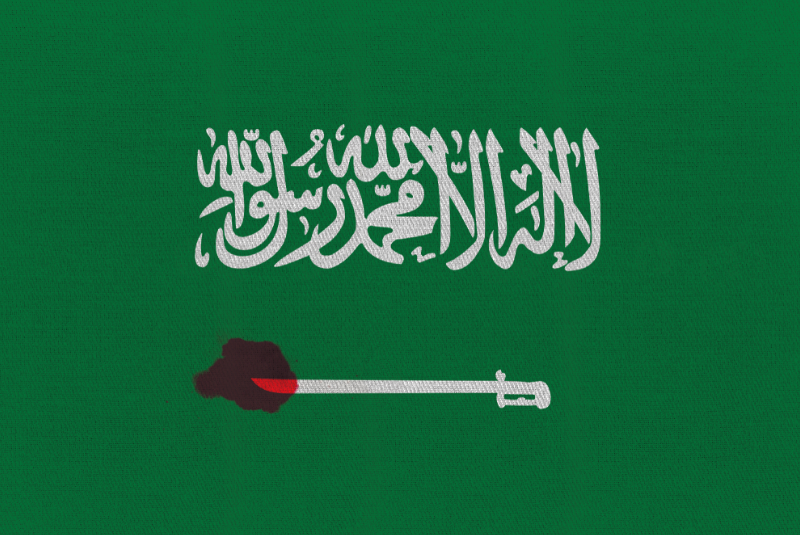
Jamal Khashoggi was a notable progressive Saudi Arabian journalist who was recently killed at the Saudi Arabian consulate on October 2nd 2018. Khashoggi was very critical of the Saudi government in his newspaper articles and even on Twitter–where he was actually banned. Khashoggi is only just one example of a good journalist who paid the price of trying to change a totalitarian government.
In Khashoggi’s last article, he made some interesting observations about the status of free speech in Saudi Arabia. He brought up Freedom House, and explained how controlled and censored Saudi Arabia is.
“I was recently online looking at the 2018 “Freedom in the World” report published by Freedom House and came to a grave realization. There is only one country in the Arab world that has been classified as “free.” That nation is Tunisia. Jordan, Morocco and Kuwait come second, with a classification of “partly free.” The rest of the countries in the Arab world are classified as “not free.””
According to Freedom House, Saudi Arabia and the freedom of free speech on the internet is ranked as “not free”. In Saudi Arabia, journalists can be jailed and arrested for what they say online, the press is not “free”, political content and social content is blocked, and social media apps are blocked as well. The internet penetration rate from the government is 70 percent.
Khashoggi explains how the censorship and internet control affects the population in that the Arabian communities are becoming misinformed and even accepting of such horrible control.
“As a result, Arabs living in these countries are either uninformed or misinformed. They are unable to adequately address, much less publicly discuss, matters that affect the region and their day-to-day lives. A state-run narrative dominates the public psyche, and while many do not believe it, a large majority of the population falls victim to this false narrative. Sadly, this situation is unlikely to change.”
We’ve seen other cases similar to Khashoggi in which good men are jailed for speaking up about government mishaps and corruption. The Chinese “Nelson Mandela”, Liu Xiaobo, is one such example– a man who also tried to enact positive change through written word.
Khashoggi’s death, just like Liu Xiabo’s death, is now a complicated matter. At first, the Saudi government would not admit that Khashoggi was actually killed at the consulate. Reports of a body double were found, and some critics think that the Saudi government was trying to cover up his death.
Later officials came out to explain that he was killed, feigning innocence and anger in the matter–but even now the actual circumstances surrounding his death are struggling to come to light. “The explanations offered to date lack consistency and credibility,” says, Canadian Minister of Foreign Affairs Chrystia Freeland.
When Xiabo died, the Chinese government also censored news of his death, and censored any reference to his accomplishments or questions from outside sources.
We are seeing only an increase in censorship and surveillance worldwide, and more good men with good ideas like Khashoggi are being arrested or killed by governments who want laws and thus the people in power to stay the same.
A VPN like TorGuard VPN is one such tool being used worldwide by journalists and online communities to circumvent internet blockades. TorGuard is unique in that it offers Stealth VPN, a protocol that allows users to remain undetected while using a VPN in countries like Saudi Arabia and China. It is our hope that tools like VPNs will be instrumental in people being able to learn about ways to improve the power of the people, freedom of speech, and internet freedom itself.