

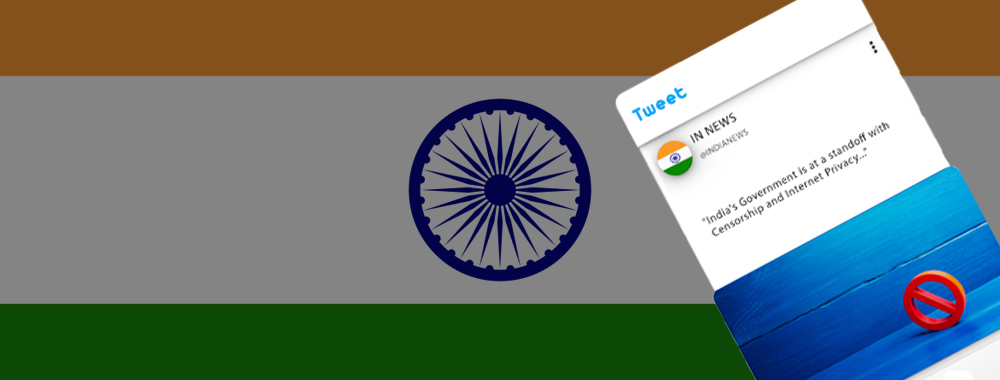
India’s opposition party posted some tweets that the Indian government declared to be misinformation. For some reason, the Indian government decided that the proper answer to tweets they didn’t like was to send the police terrorism squad to Twitter headquarters in New Delhi. The police showed up long after office hours, which wouldn’t have mattered because the Twitter office was closed for pandemic quarantine anyway.
Rather than pretending it never happened, the task force decided to release a video of themselves raiding the lobby of the building and attempting to argue with a pair of very confused security guards.
Although the events that transpired were comically absurd in the way they lacked any foresight of common sense, they’re very sinister below the surface. The Indian government still felt the need to send a terrorism task force to the Twitter headquarters as though a tweet they didn’t like was a national emergency.
India’s Horrifying New IT Rules
India’s constitution guarantees freedom of speech and takes it away in the very next lines. The “except” part of freedom of speech is if the government deems your speech a risk to national security, public order, or something vaguely declared “decency”. These caveats render the alleged freedom of speech too vague to be useful or meaningful.
India’s current government recently extended the exceptions to freedom of speech and applied those extensions to the internet. The problem with these stipulations is that India does not want to be responsible for enforcing them.
They’re requiring social media platforms to prohibit users from posting content that violates India’s restrictions. Some of these stipulations are commonplace and are already overseen by social media platforms. Many social media platforms prohibit sharing private information about other people (also known as doxxing) or content harmful to children.
Things become complicated with India’s ban on social media posts that could be interpreted as “defamatory” or “obscene”, two words too vague and subjective to appropriately police.
India requires social media platforms to remove the content, report the user, follow the chain of circulation, and identify anyone else who may have shared that content. If companies don’t comply, India intends to hold them liable in criminal court. The Indian government is, quite literally, threatening to jail the employees of social media companies if they don’t do as they’re told.
India has the power of numbers, much in the same way that China does. Both countries contain over a billion people. Nearly ⅓ of the world’s total population lives in either China or India. Platforms can’t afford to upset the authorities that rule these markets, or they will lose a substantial amount of revenue. Twitter and Facebook are already banned in China, and they may not be willing to lose India as well.
Compliance With India’s Censorship Laws
When the new rule set was implemented, India gave tech companies three months to comply. Facebook and Google have already opted in. Twitter is requesting more time. Social media platforms aren’t willing to damage their bottom line to the tune of a billion potential users. India used its power of numbers to force platforms to censor people, and the Indian government won.
The only company pushing back is WhatsApp, who have formally filed a lawsuit against the government of India calling their widespread and strict censorship requirements “a new form of mass surveillance.” WhatsApp asserts that true compliance to India’s requests would be impossible and unethical.
It’s Time to Start Using a VPN
The only way for citizens of India to speak freely on the internet is to use a different name and post from a different country. A stealth protocol VPN is undetectable by the government and will remove any blocks, restrictions, or other forms of censorship the government imposes on the internet by making the traffic appear to come from a country without internet restrictions.
If you don’t want the Indian government to dictate what you can and cannot do on the internet, use TorGuard when you browse. You can’t work with censorship, but you can always work around it.