

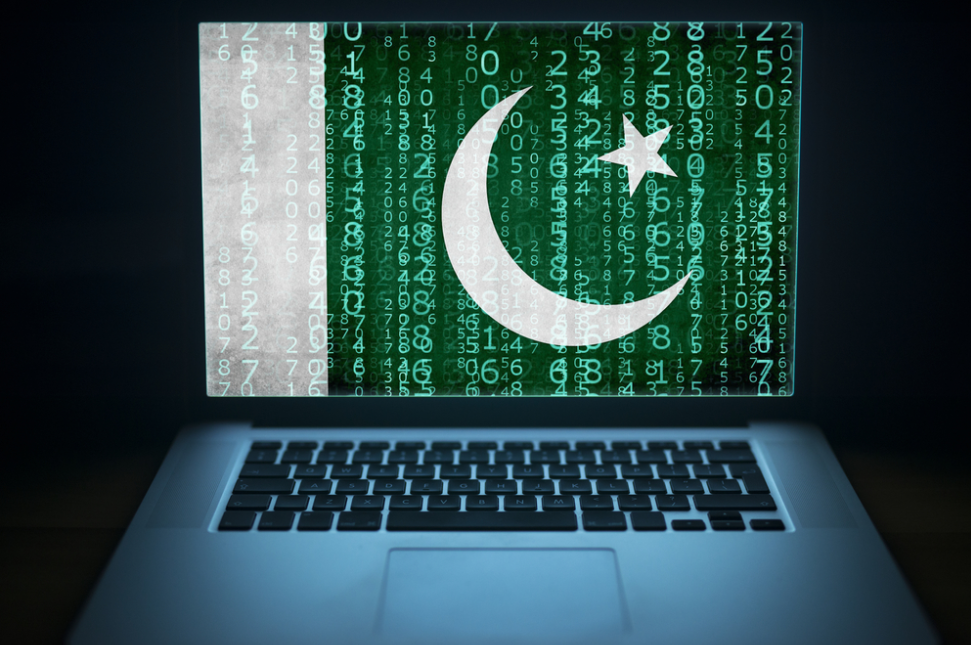
Across the world, internet freedom is getting more and more censored. Internet censorship largely started as far back as a decade ago with China and Russia leading the way, but censorship now continues to spread onward like a plague. Last year we discussed the growth of worldwide censorship, but this year the trend continues with the percentage of censored countries on the rise. For the seventh year in a row, internet freedom is on the decline with a recent report highlighting censorship methods in Pakistan.
This information comes from reports like, “Freedom on the Net”, which is released annually to document assessments on internet freedom. Right now, a good majority of the world is under internet censorship and control. Pakistan places among the top most censored countries alongside countries like Mexico, Brazil, and Syria.
Now if you want to access internet without restrictions, you can always use a VPN when in Pakistan. With a VPN, you connect to a remote server through a virtual tunnel that assigns you a shared anonymous IP and encrypts your internet traffic so outside snoopers can’t locate you through your ISP via your IP address. However, not everyone knows about VPNs, which has caused a significant number of users worldwide to be persecuted for discussing controversial topics online.
2017 marks the 6th year that countries like Pakistan has been declared “not free” and the situation only looks to be getting worse for journalists, activists, or other online users who stray too far from the law in Pakistan, and other countries as well.
“Internet shutdowns, a problematic cybercrime law, and cyberattacks against government critics contributed to the ongoing deterioration. Political speech online is vulnerable to restriction as Pakistan enters an election year in 2018,” the Freedom on the Net report noted.
The most frequent targets in Pakistan are activists and journalists who discuss political and religious topics. These topics are often reason enough for users to be prosecuted, since it’s easy to categorize online political or religious discourse outside of the majority under the umbrella threat of terrorism or government conspiracy.
In early 2017, a Pakistani court committed a facebook user to death for posting on Facebook, and in another case, an angry mob lynched a user who spoke out online. Cases like these often are ignored by the government, which only encourages more violence and censorship in the region.
“Such attacks often succeed in silencing more than just the victim, encouraging wider self-censorship on sensitive issues like religion. The state’s failure to punish perpetrators of reprisal attacks for online speech perpetuates a cycle of impunity,” explains the report.
In 2016, Pakistani improved it’s censorship and surveillance methods and laws and 2017 has seen the effects. Bloggers criticizing the military are often jailed and tortured, and it’s easy to find examples of Pakistani authorities remaining aloof about the “alleged” abductions and kidnappings. In 2018, things won’t improve if 2017 is any indication.
