

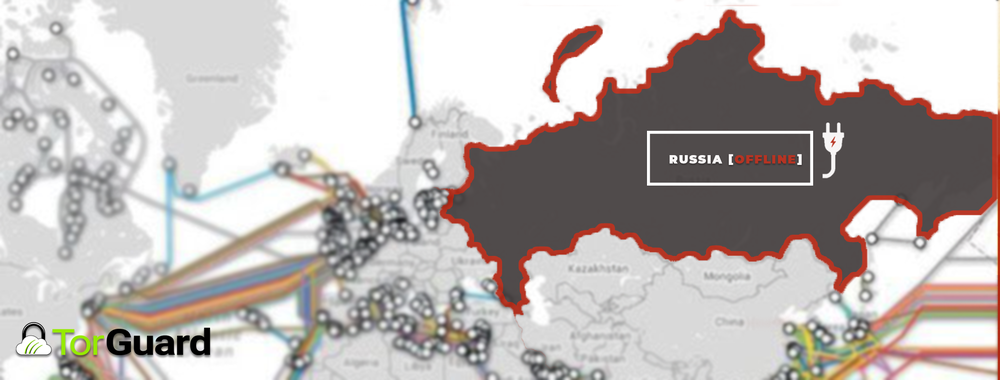
Russia may become the latest country to isolate itself from the global conversation. Their controversial policies and potential involvement in election meddling has increased the scrutiny of Russia’s role online, although the country has refused to admit to any wrongdoing. Russia’s authorities have been very conspicuously working in the background to remove the global internet from Russia, locking its citizens into their preferred news narrative and preventing them from enjoying freedom of information.
Russia’s Early Steps
In 2012, Russia started what it referred to as an “internet blacklist”. Some of the websites and content on this list were understandably blocked. Child pornography, for example, was addressed by authorities as illegal and is blocked when websites for its distribution are found. The government also blocked a myriad of websites that provided information on manufacturing drugs or instructional content relating to suicide and self harm. While the foundation of the list was still censorship, the blacklist made sense in terms of public health and safety. The public at large did not object to the initial blacklist – it seemed reasonable.
Less than a year later, the Russian government amended the blacklist to include a wealth of other content. The government called this a move against extremism, but from an outsiders perspective, the overwhelming majority of the content they decided to block does not come close to falling under the umbrella of extremism. LGBT support sites were banned because Russia does not support same sex relationships or gender transitions. Any content about Muslim or Jehovah’s Witness religious faith also went dark. Eventually, any content that could be construed as painting the Russian government in anything less than a perfect light was also blocked.
The year 2017 saw the implementation of even more restrictions, with a ban on detectable VPNs being put into place and limitations on social platforms that may allow for people to network and mobilize Russia has also started to deploy deep packet inspection technology. DPI allows the government to monitor, analyze, and block nearly anything.
How Discussions Began
Roskomnadzor, Russia’s group of officials responsible for policing the internet, have candidly been engaged in an ongoing discussion about the negative impact social media may have on Russia. This negative impact would come from the free and open sharing of news that frequently occurs on popular platforms like Facebook.
Roskomnadzor felt as though the current blacklist wasn’t enough. They claim to be cracking down on “fake news”, the definition of the term seeming to mean “anything the government doesn’t want people to talk about”.
The idea of creating RuNet, an internet specific to Russia and Russia only, is not a new one. It has been the subject of debate for years, with the government going as far as building the physical infrastructure to support the sovereign network.
In May, Russian president Vladimir Putin signed a law giving Roskomnadzor virtually unlimited control over monitoring and policing internet usage throughout Russia. Roskomnadzor moved forward with vigor, which brings us to the events of present day.
Testing RuNet
With the proper bills signed into law, a clear intention, and the proper infrastructure to enact a sovereign network, Roskomnadzor has made their intentions to pressure test their new system. Without any formal schedule announced to the public, they’ve made it known that they will periodically test disconnecting the country from the internet and check the efficiency of RuNet.
The bill approving RuNet officially goes into effect on November 1, so it is reasonable to expect that tests will begin at that time. Russia has not announced when they will officially disconnect the global internet and begin to rely exclusively on RuNet. It’s too early to speculate on the results of the tests and what they may need to improve upon before making RuNet the exclusive reality of the Russian people.
The Consequences of Internet Isolation
The world has seen the consequences of internet isolation before. People in countries like China, North Korea, Cuba, and Iran don’t take kindly to their isolation from the global conversation. Internet censorship and internet sovereignty are a means of oppressing and controlling a population – it not only disconnects people from the rest of the world, but from people in their hometowns. Protests can’t be privately organized and the news doesn’t always get through, keeping people in a position where they only know what their government chooses to tell them.
Finding Internet Freedom in Russia
Currently, the only tool that exists for allowing access to the free and open internet in countries utilizing network sovereignty is a stealth VPN. Stealth VPN use cannot be detected as VPN use, allowing the connection to bypass VPN bans while still providing users with the same level of anonymity. The government cannot spy on stealth VPN use, and location spoofing will allow residents of Russia to bypass any website bans or access blacklisted sites. As of publication, TorGuard’s stealth VPN works in Russia.