
2016 in a lot of ways, wasn’t the best year for un-restricted Internet access. We covered numerous cases in which big governments tried to silence free speech through web censorship and regulation. But how did Internet freedom in 2016 rank on a global scale?
Perhaps most importantly is the global impact of each year, and last year everywhere around the world people were affected by internet censorship which limited their freedom of speech and connection to the outside world.
A campaign group called Access Now, brought an interesting fact to our attention. Over the course of 2016, governments around the world have shut down the internet no less than 50 times.
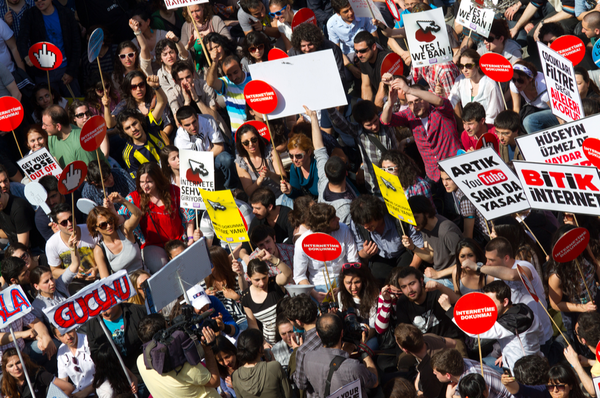
Reasons for these dramatic internet shutdowns vary from country to country. Some countries like Turkey have censored the internet to quell discussion on controversial elections and current events.
Other countries like China continue to censor the internet on a mass scale where every year more and more sites are flagged and blocked. In most cases, governmental censorship of the internet has been used as a way to cover up serious human rights issues.
Deji Olukotun, the senior global advocacy manager for Access Now explains his thoughts on the issue: “What we have found is that internet shutdowns go hand in hand with atrocities,” he said. One example of this was in Ethiopia, where, as Olukotun noted: “there’s been consistent blocking this year of social media and the internet.”
Other countries have started their own censorship programs with less nefarious goals. Australia has started a large-scale attempt to block torrent websites and the UK has started to get aggressive with internet pornography and other areas of the internet which they deem inappropriate.
These large scale censorship operations have cost a ton of money in 2016. In a recent research paper by the Brookings institute, researchers have concluded that a sum of $2.4 billion has been spent in 2016 on internet censorship globally.
India spent over $968 billion, Saudi Arabia $465 million, and Morocco lost $320 million. In addition, these were only conservative estimates and that this did not reflect additional sums stemming from investor confidence and tax losses.
These high costs and pushes for internet censorship have had an obvious economic impact, but everywhere around the world people are hurting when they try to use the open internet. This is why 2016 has seen the rise of VPNs like TorGuard.
Many of these governments get to decide “what is right” for people to see and have. In China, they have almost successfully created their original goal of a country controlled independent internet experience and the result is that people in China have limited access to real information about the world.
In other countries like Turkey, people must constantly deal with internet outages and other issues whereas countries like Egypt have corrupt telecommunication companies striving to control how information can be delivered and what cost should be the price.
In 2017, we don’t want to see more internet censorship, but the future looks dismal if 2016 is any indication. The good news is that censorship circumvention tools like TorGuard VPN are still very effective in bypassing these Internet blockades. TorGuard’s stealth VPN technology is constantly updated to keep up with recent developments and provide users access to the open web anywhere in the world. With VPN service, you can bypass any type of internet block while remaining completely undetected.
So don’t give up on 2017 yet!