

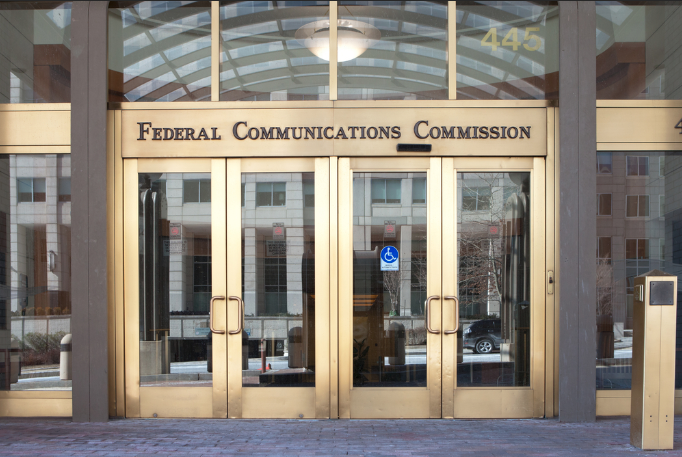
President Trump has just signed a bill which repeals Internet privacy rules passed last year by the Federal Communications Commission. It is now official: from now on, Internet service providers are free to spy on their clients’ browsing activities, and can use the collected data to generate targeted advertising. Despite massive backlash from the American people, a resolution was just signed that repeals the Federal Communications Commission (FCC) rules to protect consumers from privacy invasions by their Internet service providers (ISPs), such as Comcast, AT&T, Verizon, and Time Warner Cable. The Privacy Protection rules were initially meant to allow consumers to decide how their data was going to be used and shared by broadband providers, but has been rolled back before it was even put into practice. Yet, The Trump administration moved extremely quickly to undo many regulations of the Obama era, and the bill repealing the FFC’s Privacy Protection rules is now signed into law.
Last week, the House of Representatives voted to grant Internet service providers permission to dispose of their clients’ browsing data, and to sell it to third parties. It is considered a massive setback in individual liberties, especially when it comes to online privacy matters and this despite protests from customers and online privacy activists, many of whom are now actively looking for solutions to counter the bill.
Both the Senate and House Republicans voted in late march to repeal the Obama-era privacy regulations. The lawmakers made use of the Congressional Review Act (CRA), a bill that allows Congress and the president to overturn recently passed regulations authorized through a federal agency.
The bill was signed to repeal the rules previously set by the FCC in October last year, which codified and expanded on existing online privacy protection, and meant to go into effect later this year. They would have legally kept ISPs from selling clients’ data, and using ways as varied as invasive to track and deliver targeted ads to customers, at least without their consent. Besides, the rules would have required those companies to protect customers’ data against hackers.
Tens of thousands of people called on lawmakers to protect those rules, but Republicans in Congress repealed them by passing a Congressional Review Act resolution.
Not only does the bill repeal the rules, it also now officially prevents the FCC from writing similar rules in the future, and further restricts what the FCC can do to police ISPs looking to trade off their customers’ privacy for higher profits. The current legal landscape also keeps the FTC from controlling ISPs, leaving customers without a federal agency that can actually protect them in this space.
Despite massive protest and disapproval from Internet users and privacy advocates alike, President Trump signing this resolution into law puts the privacy of all American citizens who access the internet through ISPs in serious danger. The bill removes protections that were approved by the FCC in the final days of the Obama administration, but were still expected to go into effect. Telecom giants such as Comcast, Verizon and AT&T, are now entirely free to track, collect and resell their subscribers’ browsing histories without their consent.
FCC Chairman Ajit Pai expressed his satisfaction in a statement, praising the bill for having “appropriately invalidated one part of the Obama-era plan for regulating the internet.” Those flawed privacy rules, which never went into effect, were designed to benefit one group of favored companies, not online consumers.” According to The White House, the changes will simply create an “equal playing field” between ISPs and Internet companies such as Google and Facebook, who already freely collect data for advertising purposes.
However, broadband companies, privacy experts say, occupy a different position than internet companies. Google and Facebook, they noted, are corporate giants with plenty of market clout. But they are not a fundamental pathway to the internet the way the broadband providers are. What’s more, privacy experts said, there is little or no competition for broadband service in many markets.
“You can live without Google or Facebook,” said Dallas Harris, legal and policy fellow at Public Knowledge, a nonprofit consumer group. “It’s pretty difficult to walk away from internet service altogether.”
The repeal has drawn huge criticism from all sides, including from Mozilla’s Executive Director Mark Surman, who urged citizens to fight back: “The repeal should be a call to action. And not just to badger our lawmakers,” he said. “It should be an impetus to take online privacy into our own hands.”
The bill now being signed into law, that is unfortunately the only solution the public has to protect their privacy. Mark Surman made a few suggestions to help users preserve their online browsing data, and suggested the use of Tor and encrypted messaging apps such as Signal, but mostly recommends using VPN services. When the public realized that their data was now at stake, Google searches for the term “VPN” reportedly reached unprecedented levels. That trend continued within the next days, and many major VPN providers reported a vast increase of interest from the public in their service and products.
To this day, it is not certain if interest from the public will remain this high when it comes to internet security providers, but what is clear is it is now becoming the only viable option when it comes to individual privacy protection, and the global outcry is very likely to accelerate the democratization of such services. The presidential move may even prove to be the wake-up call internet users needed.
The public spoke up on a large scale, and many lawmakers got the message that privacy is important to their constituents. Groundwork is now laid to keep fighting for privacy protections. Meanwhile, users should know there are actual ways to fight the invasion of their privacy on an individual scale as long as Congress isn’t willing to listen to the citizens and hear that they are unwilling to trade away their most basic privacy rights in order to access the internet.
