
Russia has implemented media censorship for a very long time. Anything that questions the government or the state of political affairs in Russia is censored. The long arm of the government often intimidates people into self-censorship – they don’t want to be on the receiving end of forced silence. There may not be a need to self-censor anymore, as Russia intends to implement some strict blocks that will prevent Russians from reaching the global conversation.
Russia’s Plan
Russia’s plan has not yet been formally announced, but insiders have recently brought some troubling information to light. Russia’s Federation Council, the upper level of government, have been discussing the social media giants regularly. The government is in the early stages of adopting the attitude that social media is harmful to the country.
In a somewhat ironic turn of events, Russia blames social media users for influencing its elections. Roskomnadzor, Russia’s official internet regulator, is publicly scolding entities like Google and Facebook. Russia’s belief that social media is influencing their elections, as hilarious as it might sound to anyone who has lived in the United States for the past few years, is being treated as a serious priority within their government. Roskomnadzor has gone as far as to call Google and Facebook’s presence “illegal”.
Speculation suggests that Russia may attempt to file lawsuits against major players in social media. Nothing has been verified or filed yet, but in the event that Russia takes action, it’s unlikely that any such lawsuits would be anything more than symbolic.
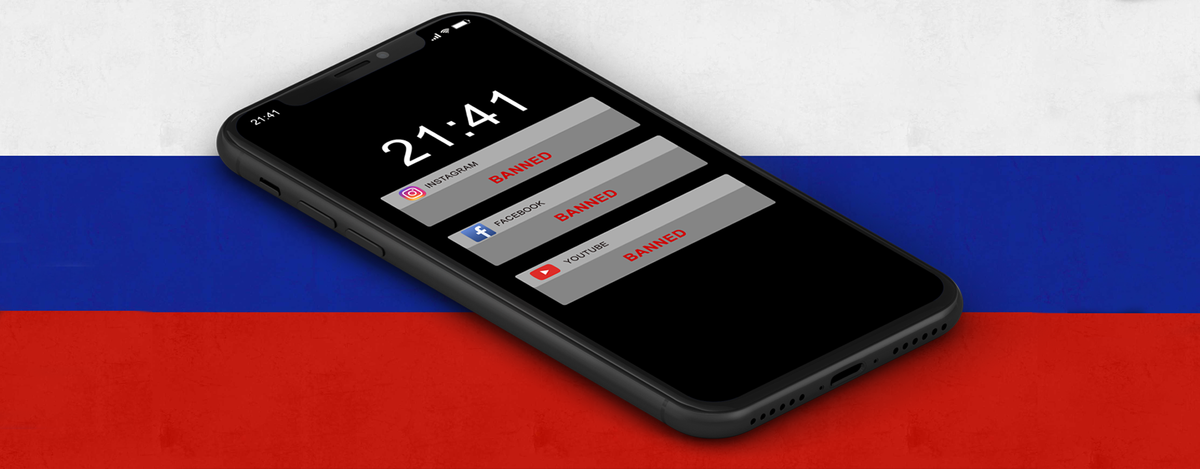
The optics of the situation make it appear as though Russia is going the way of China, banning social media that bridges international gaps. Unless the tone of the conversation changes, Russian people can say goodbye to YouTube, Instagram, Facebooks, and perhaps even Google’s search engine.
Workarounds to Social Media Blocks
Russia’s sudden and alarming interest in social media should have the people of Russia on high alert. It’s possible that they may lose access to their entertainment and social connections if Russia decides to see the next step of censorship through.
In the event that Russia does block social media websites, a VPN may serve as a workaround. VPNs keep your internet activity completely secure and encrypted, bypassing regional blocks and blocks imposed by the government. It might be a wise idea to start using a VPN now. If social media is receiving an intense amount of scrutiny and the government already has control of the internet, there’s no way to know if your posts and activities are being watched.
VPN prevents spying on anyone’s part – including the government. Everything you view, send, read, or receive cannot be intercepted by any third party. If a social media block does take effect, your location will not be discernible. This means a block won’t impact you, and you’ll have no lapse in your access to social media.
The only way the Russian government can stop users with VPNs from accessing social media is by blocking the use of VPNs. This can and does happen under strict regimes. In fact, China has blocked VPN use in Hong Kong. These blocks apply to many VPNs, but it may not be the end of the line. When this happens, there’s another workaround.
TorGuard’s Solution
TorGuard offers all the benefits of a VPN with one additional feature – a stealth mode. Stealth VPN adds a new layer of complicated confusion for internet service providers and government surveillance agencies. They mask activity to the point where it appears as though a normal internet connection is being used. Stealth connection via OpenConnect is a default connectivity method for TorGuard – you won’t need to go out of your way to take that extra step. Your VPN can’t be detected, making it exceptionally more difficult for the government to block.
Conclusion
Whenever the government even begins to speculate about censorship, it’s time to use a VPN. TorGuard is proud to offer one of the most secure and anonymous VPNs on the planet. Our Stealth mode makes it an even better option for people who live in countries where the government adamantly blocks information and websites. VPNs are the way of the future – everyone deserves full freedom and privacy online.