

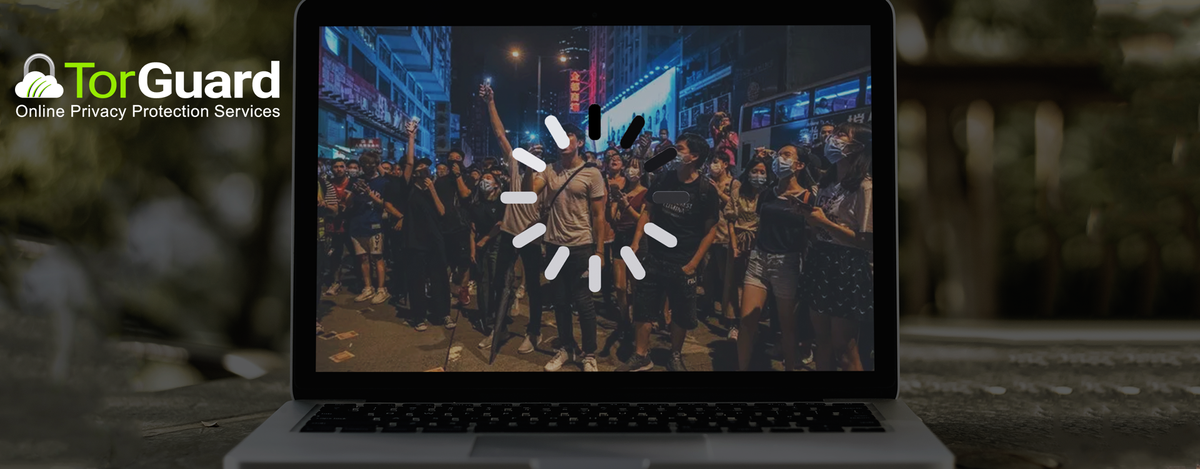
Hong Kong has been a hotbed of unrest for quite some time. The people are remarkably more liberal than the communist government they have to answer to. They’re fighting for their freedoms every day, and public protests have become a part of daily life. There’s always a sense of unease when it comes to freedom of information and the long arm of censorship. Some reports seem to indicate that the government has grown wise to the people’s attempts to circumvent their oppressive rules and restrictions, fighting back against the people by overextending even further.
China’s Complicated History with Censorship
The population of China is subject to all restrictions put in place by the Chinese government. The communist party of China heavily restricts and controls what information can enter or exit the country. The government went as far as to create their own alternatives to social media platforms like YouTube and Facebook that can only be used within the country – information can’t spread across the world, and outside information can’t come in. Their surveillance program, referred to as the Great Firewall of China, is used to keep citizens in line.
Hong Kong, a territory of China, had a reputation for being a small liberal reprieve in a sea of communist oppression. Things were intended to be different there. Hong Kong was formerly independent of China, but merged into the country while maintaining its separate system and values. The internet wasn’t restricted, the people wanted freedom of speech and freedom of information, and with few small exceptions, they had it.
Now, things seem to be changing. Censorship rules may soon be put into place by the government that directly targets and affects Hong Kong, which was never part of the agreement. Protests have erupted in Hong Kong for a separate issue, and the Chinese government has gone so far as to censor those from China’s internet, too.
Unrest in Hong Kong Over VPN Blocks
Hong Kong and its people have views that drastically differ from the rest of China. They’re quick to express those views and frequently protest. They’ve been using the internet to organize protests, spread their messages, and get information out. Since the government has a history of spying on people, many people in Hong Kong use VPN services to keep themselves protected online. Is Big brother finally catching on in Hong Kong?
People in Hong Kong using Private Internet Access (PIA) found that their VPNs no longer work. Some users report that they were completely unable to access the service. Others found that the service worked, but every website seemed to be inaccessible. Although the agreement between Hong Kong and the Chinese government does not allow for this sort of interference, China could be engaging in censorship anyway. The people are furious.
Do Any VPNs Work in Hong Kong?
With the oppressive Chinese government making every attempt to surveil and censor the people of Hong Kong, they need VPNs now more than ever. These people deserve the right to use their voice and call out injustices as they happen. They need the freedom to criticize the nature of their government and its abuse of power, and a VPN is necessary to keep them safe as they converse and organize.
At the moment, PIA is the only VPN known to have been blocked by the Chinese government and some are now reporting it was unblocked. TorGuard VPN, currently works thanks to multiple Stealth VPN options that can bypass VPN blocks. Some VPNs are less likely to be detected than others, and utilizing a VPN with a stealth mode is of the utmost importance. The government can’t block it if they don’t know what’s going on and can’t see you are running a VPN tunnel.
TorGuard’s Stealth Mode
TorGuard’s Stealth mode was designed to evade deep packet inspection, making it valuable in countries where censorship is prevalent. Stealth VPN will create the impression that a device is connected to a normal SSL website, even if it isn’t. It deliberately misleads anyone who may be watching for signs of activity that might suggest that someone is bypassing censorship by using a VPN.
TorGuard offers five stealth connection options. The most popular and simplest to use is OpenConnect, Stunnel and Shadowsocks. OpenConnect is the default connection mode for most TorGuard users, and it’s simple to use. Just select it from the drop down menu.
If OpenConnect will not suffice or you need something even more secure, you can utilize the Stealth OpenVPN servers. This connection method works with every TorGuard desktop version and android app. You can Stealth OpenVPN by using the OpenVPN tunnel type in with the “4443” port, SHA256 Stealth settings.
Conclusion
If you live in or are visiting a country or territory where extreme government censorship will prevent your access to the internet or heavily surveil what you browse, you need a stealth VPN provider. Since these VPNs will never be flagged as VPN use, they’re the only way to browse safely and remain safely. TorGuard is proud to have a solution to a problem that affects millions of people who deserve full freedom online.