

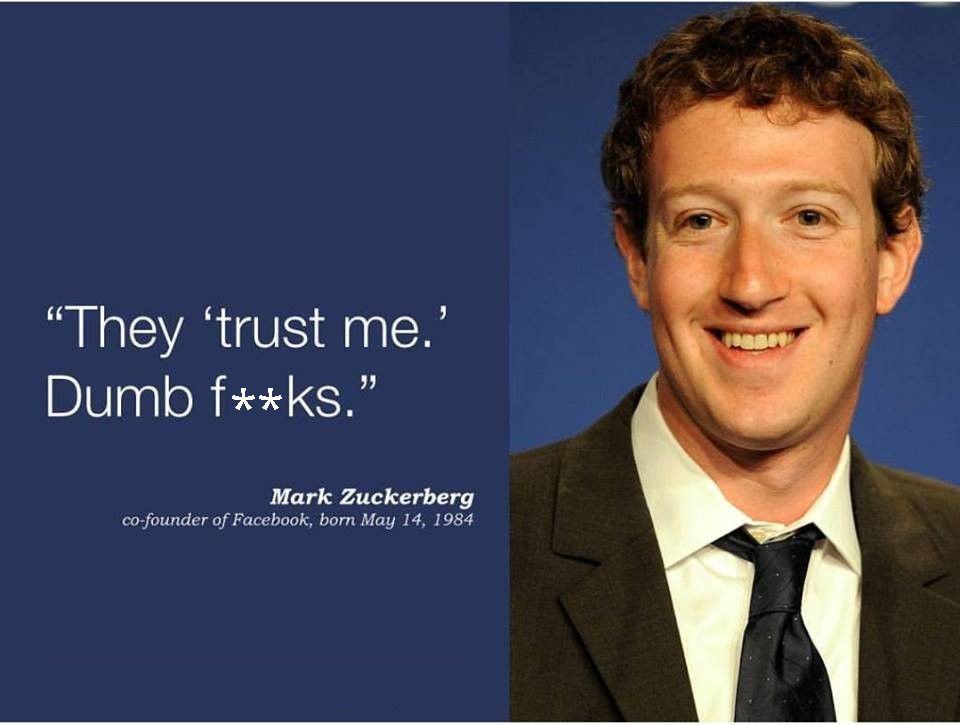
Facebook wants you to believe that they’re philanthropists. They project the image that their prime directive is to keep people together, uniting them through social media and bridging communication gaps throughout the world.
Many people in areas where the internet is not easily accessible or mobile data is prohibitively expensive are not as large of a part of this global community of conversation. In economically disadvantaged countries, many people have inexpensive basic smartphones that will allow them to connect to the internet if they could afford access.
That’s where the western technology “heroes” swoop in with their red capes and seemingly innocuous messages of goodwill and altruism. Facebook will let you access the internet through their app for free, removing financial barriers to information. How kind of them. What could possibly be suspicious about that?
When Things Seem to Be Too Good to Be True, They Probably Are
In comes Facebook’s Free Basics, an internet app that allows people to connect to a watered down version of the platform with a limited amount of free data everyday. Facebook’s user numbers grew in countries where the platform didn’t have much of a presence, as these people finally had internet access through the platform.
They expanded their outreach with Discover, a Facebook based app that allows users to browse websites other than Facebook. Discover works by loading minimalist versions of websites to control their data load. Users see all the text from websites, but images don’t automatically load and videos don’t autoplay. Or at least they aren’t supposed to.
Everything other than text won’t load on most websites, unless those websites or apps are owned by Facebook. Researchers at the University of California, Irvine took a closer look at the phenomenon. They noticed that Discover users in the Philippines consistently experienced different performance between Facebook owned properties and those of their competitors.
The majority of images won’t load on YouTube, a property of Google’s parent company. Pictures of products don’t load on independent shopping platforms. On Instagram, a Facebook owned property, 96% of images automatically loaded. No one else’s social networks seem to be performing in a meaningful way, while Facebook’s ran without restrictions.
What Was The Point?
Although Facebook claimed this blatant bias was due to a technical error rather than deliberate censorship of their competitors, they aren’t absolved of their suspicious image. From an outsider’s perspective, it might seem as though Facebook offered their service to people with inconsistent internet access in order to grow their user base while suppressing competitive platforms to prevent their user numbers from escalating.
Of course there is no legitimate proof to substantiate that suspicion and it may be a bit conspiratorial to adopt that perspective, but it’s easy to understand why some people may perceive the situation that way.
Facebook’s Shady Reputation with User Privacy
In addition to their most recent snafu with ambiguous censorship, Facebook has a history of releasing or providing controversial apps for their users. Several years ago, Facebook offered users a service called Onavo Protect, something that Facebook called a VPN. This service was not a VPN.
Onavo is currently being sued by the Australian Competition and Consumer Commission for collecting masses of private user data and information and feeding it to Facebook. If the allegations are deemed true, this would mean that Onavo Protect was a surveillance tool. Surveillance tools are the exact opposite of VPNs.
The Moral of the Story
It’s not wise to trust “free” products and services provided by big tech companies that collect endless private data about you and use it to make money. If you want a real VPN that won’t collect your information, track you, or profit off of your private information, there’s always TorGuard.