

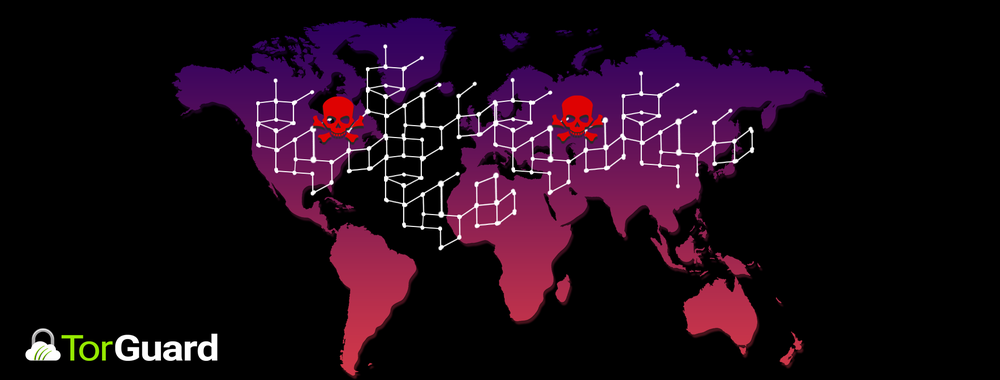
There are a lot of trendy buzzwords and new technology circulating the internet. Everyone is just now finally starting to grasp the blockchain, thanks to the popularity and advancement of cryptocurrency. The idea of a decentralized internet has been floating around for a while, and at its core, it’s likely to be a good thing. While TorGuard fully believes in the promise of decentralized peer to peer networking, the problem for decentralized VPNs comes where the two meet: a blockchain driven VPN service.
Several decentralized VPN projects are currently in full motion, but you might to think twice before adopting them. There are many legal risks and privacy risks that may come as a result of utilizing decentralized VPNs in their current state. Don’t get too excited to make the jump – look before you leap.
What is a Decentralized VPN?
More or less, a decentralized VPN is a VPN that runs on a barter system. You give up some of your bandwidth to other users on the network, and in exchange, you get to use other available IP addresses. You’ll even get paid in some form of cryptocurrency for allowing your resources to be used. Ethereum and BAT (Basic Attention Tokens, a type of Ethereum tokens) are awarded to you for your contribution.
In a virtual utopia, this is a great idea. Everyone is anonymous, and everything appears to be free. You’re getting a VPN and even a little bit of cryptocurrency for what you provide. Unfortunately, this is an idea that only works well in theory. In practical application, it hasn’t proven to be the safest or most effective way to browse the internet anonymously.
What Companies offer Decentralized VPNs?
Companies like Mysterium and Orchid have emerged, promising users free anonymity and payment in Bitcoin for helping to create the first decentralized VPN platform. Brave browser has recently thrown their hat into the ring with a dVPN project that incentivizes its users with BAT coin.
These companies are legitimate, and they’re relying on a mass influx of users to launch their projects. They’re up front about what they do – they utilize blockchain technology, take some of your bandwidth and resources, and provide you with a VPN that will allow you to bypass region restrictions and view blocked websites.
It all looks good on paper, but a deep dig on the technology as it currently exists suggests that right now might not be the prime time to get in on the action.
Similar Technology Already Exists – And It’s Free
Decentralized VPNs utilize Peer to Peer technology – something that has been prevalent and functional on the internet since the invention of the tor Onion routing network. Tor Onion Routing Network and I2P (Invisible Internet Project) have been doing the same thing for years. These projects don’t require a hefty exchange of resources or the involvement of cryptocurrency to function properly. Cryptocurrency mining and the blockchain don’t have anything to do with the process. It’s perfectly simple and functional to utilize Peer to Peer technology without all of these layers of additional complication.
Even though these services have existed for years, they still pose some safety complications and risks. That’s why many people who are well versed opt to use traditional VPNs instead or use a VPN as a second layer of security. The risks that exist with these services also exist with decentralized VPNs, which have failed to solve the problems that might dissuade privacy savvy and tech literate users from adopting I2P, and the Tor Onion Routing Network.
The Risks of Using Decentralized VPNs
The problem with decentralized VPNs, as well as peer to peer networks, is the lack of authority and oversight. Everyone is the boss, so ultimately, no one is the boss. This creates security risks, liability risks, and potentially even legal problems for people who utilize these decentralized services.
An Invitation for Bad Actors
Do you trust the exit nodes of your decentralized VPN? It’s possible for the security of users to become compromised by bad actors posing as friendly Decentralized VPN operators. There’s a lot of money to be had in spying on people. Data is worth a lot to marketing companies and advertising researchers. If a new decentralized VPN operator pops in and slightly undercuts everyone, they’re likely to be successful as bad actors. It’s also possible the exit node operator could have purchased the bandwidth fraudulently and is reselling it for tokens. When they get caught, the “decentralized” IP you’re using could be connected to fraud. These are just a couple of examples but It’s easy to innocently find yourself in that trap.
Getting Busted for Someone Else’s Crimes
This is perhaps the biggest reason to never lend your IP address to anyone
else. People use VPNs to avoid detection. It’s inevitable that someone might
eventually use your IP address through the decentralized VPN for nefarious purposes.
For example, let’s say a person is sharing illegal images using the same “decentralized”
IP address as you, and is recorded using your IP address. They get caught, and
where do the cops show up? That’s right – you’re in handcuffs for something you
never knew anything about. There’s no way that $5 worth of Ethereum is going to
cover your legal costs. It’s also worth noting that VPNs like TorGuard offer
additional IP anonymity, since hundreds or thousands of users could share the
same IP address at any given time.
Latency Issues
Premium VPNs like TorGuard are able to guarantee high speeds. Decentralized VPN servers often suffer from latency issues. Servers and bandwidth don’t come cheap – that’s why the fastest VPNs are never free, and the free VPNs are never fast. The types of servers and the amount of bandwidth needed simply won’t come from the average user. No one has access to that kind of equipment at home.
Many people using decentralized VPNs are doing something that they want to keep private – like torrenting. You’re sharing space with people who might have over 100 gigs of active downloads running in Bittorent, and it’s going to throttle everything. A decentralized VPN network simply won’t be able to handle it.
Repercussions from ISPs
Is the operator classified as an ISP to claim safe harbor? While some tor node operators might be smart enough to operate as a business, most users trying to earn a few extra ETH or BAT tokens will not, putting them at a significant legal risk. In addition to that, virtually all consumers acting as node operators probably do not have permission (implied, unspoken, or otherwise) from their ISP to resell bandwidth. If they’re caught doing so, they may have their service terminated or face other penalties for violating their agreement with their service provider. The current climate isn’t equipped for decentralized VPNs, as most ISPs typically do not want to play any part in them.
Do Peer to Peer Payments Break Anonymity?
Is operator payment anonymized? Decentralized VPN systems that pay users leave a payment record on the blockchain. There’s a large, ever-growing bank statement of every transaction. Oftentimes, this record is public. Without a fully anonymous cryptocurrency, there is no fully anonymous P2P VPN experience. The record of your payment is also the record of your usage, which defeats the entire purpose of using a VPN for privacy.
Get a
Better VPN
Do you really want to risk going to jail for $5 worth of eth tokens? Even if no one commits a crime with your IP address, you’re still going to deal with slow internet, possible security flaws, and potential scams by bad actors or fraudsters just looking to make a buck. There are too many ways that decentralized VPNs can go wrong, and no one has proposed an efficient solution to the myriad of problems they create. The best solution is to entirely forego decentralized VPNs in favor of reputable, safe, and affordable VPNs like TorGuard VPN. We offer better anonymity, we don’t want your resources, and we can provide a lightning fast connection for numerous devices simultaneously. You’re speedy, safe, and untraceable when you use TorGuard VPN.