

Traditional VPNs are losing their edge when it comes to bypassing firewalls. With advanced censorship and surveillance on the rise, traditional VPNs struggle to bypass detection. Enter V2Ray proxy, a stealth proxy solution designed to overcome these challenges. Here's what makes it stand out:
- Stealth Proxies: Unlike traditional VPNs like Wireguard and OpenVPN, V2Ray disguises traffic as regular HTTPS activity, making it harder to detect.
- Flexible Protocols: V2Ray supports VMess, VLESS, and Trojan - each tailored for specific needs like security, speed, or bypassing censorship.
- Advanced Features: It uses traffic routing, domain fronting, and WebSocket over standard ports to ensure uninterrupted, secure connections.
Why it matters: V2Ray is ideal for users in restrictive environments like censored countries, corporate networks, or universities. It offers better privacy, faster speeds, and greater adaptability compared to VPNs. Below, we break down its key protocols, setup tips, and why it's a game-changer for online privacy.
Understanding V2Ray Protocols: VMess, VLESS, and Trojan
V2Ray operates using three key protocols, each tailored to meet specific privacy and performance needs. Together, they create a stealth proxy system designed to handle various network conditions and security demands. These protocols form the backbone of a flexible and efficient proxy configuration.
VMess: Focused on Security and Stealth
VMess is the core protocol of V2Ray, designed with a strong emphasis on security and concealment. It utilizes advanced encryption to safeguard connection data while incorporating authentication methods to defend against replay attacks. Its ability to obscure traffic patterns makes it difficult for monitoring systems to detect proxy usage. This makes VMess a solid choice for high-security scenarios where privacy is critical.
VLESS: Prioritizing Speed and Efficiency
VLESS is built for speed and efficiency without compromising security. Its lightweight handshake process reduces latency, enabling faster initial connections. This makes it an excellent option for activities that require high bandwidth, like video streaming or downloading large files. VLESS is ideal for users who want quick, reliable connections for data-heavy tasks.
Trojan: Disguised as HTTPS Traffic
Trojan takes a unique approach by imitating regular HTTPS traffic. Using standard TLS encryption and following typical HTTPS communication patterns, it blends seamlessly with normal secure web browsing. This makes it hard for network filters to differentiate Trojan traffic from legitimate HTTPS activity. By relying on certificate-based authentication with standard SSL certificates, Trojan enhances its ability to bypass censorship and avoid detection in heavily restricted networks.
Protocol | Key Strength | Ideal Use Case | Impact on Speed |
|---|---|---|---|
VMess | Strong security and traffic obfuscation | High-security environments | Moderate |
VLESS | Optimized for speed and privacy | Streaming or large file downloads | Minimal |
Trojan | Mimics HTTPS traffic | Highly censored networks | Low |
These protocols offer flexibility within the V2Ray ecosystem, allowing users to choose the best option for their specific privacy and performance needs. Whether used individually or in combination, they provide a customizable solution for maintaining anonymity and navigating restrictive network conditions effectively.
How V2Ray Improves Stealth and Bypasses Blocks
V2Ray's design makes proxy connections hard to detect. Unlike traditional proxies that stick to a single protocol, V2Ray uses multiple layers of obfuscation, adapting to various network environments and censorship methods.
Traffic Hiding and Protocol Options
With its multi-protocol setup, V2Ray can switch between communication methods depending on network conditions. If one protocol is blocked, traffic is automatically rerouted through another, ensuring uninterrupted connectivity. This adaptability makes it difficult for network administrators to impose complete restrictions.
V2Ray uses protocols that blend seamlessly with regular web traffic. For instance:
- VMess changes encryption patterns with every session.
- VLESS mimics standard browsing behavior.
- Trojan imitates HTTPS traffic using valid SSL certificates.
Another stealth tool is domain fronting, which routes traffic through well-known domains, making it appear like typical web activity. Additionally, V2Ray supports WebSocket connections over standard HTTP ports (80 and 443). Since blocking these ports would disrupt normal web usage, this method bypasses many firewalls. These connections even replicate standard HTTP headers and response codes, making them appear indistinguishable from regular website traffic.
These features make V2Ray particularly effective in situations where maintaining stealth is essential.
Practical Use Cases
V2Ray is widely used by journalists, remote workers, content creators, and researchers who need to bypass censorship, access restricted content, and maintain secure connections. Its protocol diversity ensures stable and discreet connectivity, even for high-security or data-intensive tasks.
Benefits Over Standard VPNs
Unlike traditional VPNs, which often have recognizable traffic patterns and rely on specific ports and protocols, V2Ray disperses traffic over standard web ports and mimics normal application behavior. This makes it harder for Deep Packet Inspection (DPI) systems to detect and block.
V2Ray's modular design allows users to customize their setup based on specific needs and network conditions, unlike standard VPNs, which typically offer limited options. This flexibility is crucial in environments with rapidly changing restrictions.
Another advantage is efficiency. Traditional VPNs can consume significant bandwidth due to encryption overhead and less efficient protocols. In contrast, V2Ray’s lightweight protocols, like VLESS, reduce unnecessary data usage while maintaining security.
V2Ray also excels with its routing capabilities, enabling users to selectively direct traffic through the proxy. For example, you can configure it to route only specific applications or domains, while other traffic bypasses the proxy entirely. This not only enhances performance but also reduces the risk of detection by limiting proxy use to essential activities.
V2Ray Protocol Comparison: Choosing the Right One
To help you decide which V2Ray protocol aligns with your privacy and performance needs, here’s a detailed comparison of the key protocols: VMess, VLESS, and Trojan. Each has distinct features tailored to different scenarios, so selecting the right one depends on your specific requirements.
Protocol Features and Differences
Here’s a breakdown of how these protocols stack up across critical factors:
Feature | VMess | VLESS | Trojan |
|---|---|---|---|
Encryption Strength | Built-in AES encryption with multiple cipher options | Relies on transport layer encryption (TLS/XTLS) | TLS encryption with certificate validation |
Performance | Moderate due to extra encryption overhead | Fast, with minimal processing overhead | Solid performance with standard TLS |
Stealth Level | Medium – custom protocol detectable by DPI systems | Medium – lightweight but still identifiable | Highest – traffic closely mimics HTTPS traffic |
Setup Complexity | Moderate – requires UUID and alterId configuration | Simple – minimal configuration needed | Complex – requires a domain and SSL certificates |
Resource Usage | Higher CPU usage due to encryption layers | Lowest resource consumption | Moderate resource usage |
Compatibility | Widest client support across platforms | Increasing support as it gains traction | Good support but fewer client options |
Best Use Case | Balanced security and compatibility | Speed-critical tasks with decent privacy | Heavy-censorship environments demanding discretion |
- VMess: Known for its robust encryption and compatibility, it’s a dependable choice for users needing reliability across diverse devices and networks.
- VLESS: Prioritizes speed and efficiency, making it an excellent option for tasks like streaming, video conferencing, or transferring large files.
- Trojan: Stands out for its stealth capabilities, closely mimicking regular HTTPS traffic, which is ideal for bypassing advanced censorship.
Protocol Selection Guide
Here’s how you can decide which protocol suits your needs:
- VMess: Perfect for users who prioritize compatibility and need a protocol that works seamlessly across various devices and network conditions.
- VLESS: Best for speed-focused scenarios in environments with moderate restrictions. It’s straightforward to set up and performs exceptionally well for bandwidth-intensive activities like streaming or large file transfers.
- Trojan: Designed for regions with heavy censorship, where avoiding detection is crucial. While it requires managing domains and SSL certificates, its stealth capabilities make it indispensable in such environments.
Your choice should also consider local censorship levels and your technical expertise. For areas with advanced deep packet inspection, Trojan offers unparalleled stealth. In contrast, regions with less aggressive filtering can benefit from VLESS’s speed and simplicity. VMess remains a versatile option, delivering a balance between security and compatibility for most use cases.
Using V2Ray with TorGuard Services
TorGuard users can access the open web in restricted regions by taking advantage of our advanced V2Ray protocols with TorGuard's secure network. This integration amplifies V2Ray's stealth features, making traffic analysis even more challenging while maintaining the reliability and performance that TorGuard is known for.
TorGuard Infrastructure Compatibility
TorGuard's extensive network - boasting over 3,000 servers in 50+ countries - supports V2Ray deployments seamlessly. Its advanced encryption protocols, including Stealth OpenVPN, WireGuard, and OpenConnect, give you the flexibility of switching between a standard VPN or V2Ray to create a layered security setup.
For users planning to deploy the Trojan, Vmess, or Vless protocol, TorGuard’s anonymous proxy service particularly useful. These servers provide a stable endpoint hidden behind various CDNs, a proven web fronting strategy that can bypass VPN filtering anywhere in the world . We regularly rotate V2ray domains and servers to ensure they continue to work even when faced with blocking.
Additionally, TorGuard’s encrypted DNS services complement V2Ray setups by reducing the risk of DNS leaks, further securing your stealth proxy configuration.
TorGuard Privacy Features
TorGuard’s Stealth VPN technology pairs effectively with V2Ray protocols. While Stealth VPN disguises VPN traffic as standard HTTPS activity, adding V2Ray introduces another layer of obfuscation, making traffic analysis even more difficult.
The service’s strict no-logs policy ensures that no records of your activities are stored, even when routing V2Ray traffic through TorGuard’s network. With support for multiple devices, you can deploy V2Ray across all your devices effortlessly.
TorGuard also provides 24/7 customer support, which is invaluable when troubleshooting complex V2Ray setups or addressing technical issues promptly.
To help you take advantage of these features, here’s a guide on how to integrate V2Ray with your TorGuard subscription.
TorGuard and V2Ray Setup Guide
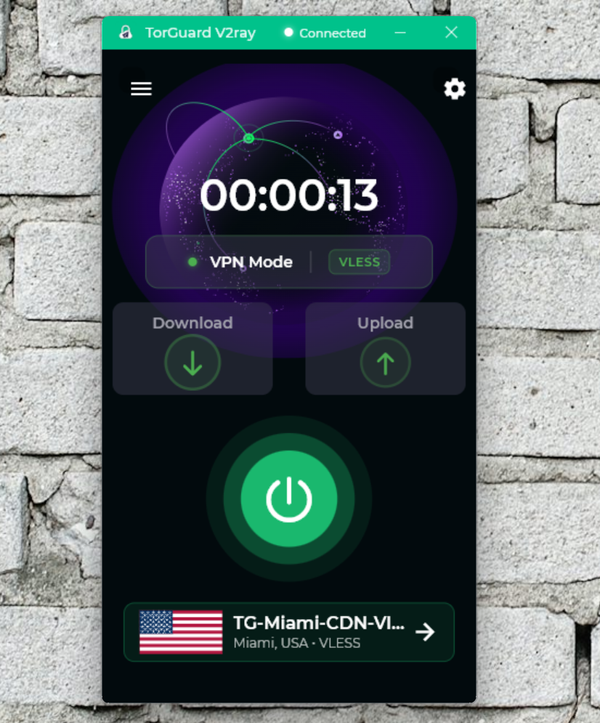
Setting up V2Ray with TorGuard requires using a third party V2ray client app, or TorGuard's new V2ray client for Windows, MacOS, Linux, Android or iOS. Start by choosing the TorGuard servers that align with your selected V2Ray protocol.
- For VMess/Vless: Get your subscription URL or Vmess URL from the member's area. Import the servers into the V2ray client, choose your TorGuard endpoint, then tunnel your traffic to the target server using V2Ray.
If you’re using the Trojan protocol, you'll find the setup is similar. Anonymous proxy users can find a fully updated list of our V2ray Trojan server in the member's area. If you're in a restricted region and have trouble downloading the servers with our subscription URL, use the official TorGuard V2ray client app to first connect as it has our latest server list built in.
Once these configurations are complete, set up your client applications. Most V2Ray clients allow you to specify a V2ray subscription URL, making it straightforward to route traffic through TorGuard first and keep your server list up to date.
After completing the setup, test your connection for IP and DNS leaks to ensure everything is working as intended. Regularly update both TorGuard and V2Ray configurations to stay protected against new threats.
Conclusion: The Future of Stealth Proxies
The world of online privacy is changing fast, and V2Ray is stepping up as a major advancement in stealth proxy technology. With internet censorship becoming more complex and traditional VPNs facing tougher detection measures, V2Ray offers a flexible and powerful solution for those seeking to protect their digital freedom.
Key Advantages of V2Ray
V2Ray stands out for three main reasons, making it a top choice for privacy-conscious users:
- Customizable Design: Its modular setup allows you to choose the best protocol for your needs - whether it’s VMess for security, VLESS for speed, or Trojan for mimicking HTTPS traffic. This adaptability ensures you can tailor your setup to your specific situation.
- Protocol Flexibility: When one method is blocked, V2Ray provides immediate alternatives without requiring a complete overhaul of your system.
- Advanced Stealth Features: Beyond basic encryption, V2Ray disguises data patterns so effectively that even deep packet inspection struggles to detect it.
How TorGuard Complements V2Ray
When paired with V2Ray, TorGuard takes your privacy setup to the next level. With over 3,000 servers in 50+ countries, dedicated IP options, and a strict no-logs policy, TorGuard provides the reliable infrastructure needed to maximize V2Ray's potential. Add 24/7 customer support to the mix, and you have a robust solution for maintaining online privacy.
You can take advanted of our V2ray and VPN bundle plan which gives you the best of both worlds: Stealth OpenVPN, OpenConnect and SSTP, plus V2Ray's advanced protocols. You'll get access to thousands of servers, multiple protocols, all powered by our dependable infrastructure giving you a powerful toolkit for staying ahead in a world of increasing surveillance. Together, they offer not just technical solutions but a strategic way to protect your digital rights in an ever-changing online landscape.
FAQs
×
How does V2Ray make your online activity harder to detect compared to traditional VPNs?
V2Ray takes online privacy to the next level by masking your internet traffic to resemble standard HTTPS activity. Essentially, it makes your browsing look like everyday web use, helping you slip past censorship and surveillance systems that usually flag or block VPN traffic based on recognizable patterns.
What sets V2Ray apart from traditional VPNs is its ability to avoid detection. While many VPNs can be spotted due to their unique traffic signatures, V2Ray employs sophisticated methods to blend seamlessly with regular internet traffic. This makes it much tougher for deep packet inspection tools to identify or block your connection, ensuring a safer and more private online experience.
×
What sets VMess, VLESS, and Trojan protocols apart in terms of setup difficulty and best use cases?
VMess brings a wealth of features to the table, including advanced encryption and plenty of customization options. It’s a go-to choice for those who place a premium on security and don’t mind dealing with a more intricate setup. If privacy is your top concern, VMess has you covered.
VLESS, on the other hand, takes a more streamlined approach. It’s lightweight, easy to configure, and optimized for speed. This makes it perfect for low-power devices or situations where performance needs to be top-notch.
Trojan stands out for its focus on stealth and simplicity. With its straightforward setup and strong obfuscation capabilities, it’s an excellent tool for navigating advanced censorship systems. If you’re in a heavily restricted environment, Trojan is a solid choice.
×
How can I keep my V2Ray setup secure and effective in networks with frequent restrictions?
To keep your V2Ray setup secure and running smoothly, it’s important to stay on top of updates. Regularly updating your subscription URL gives you access to the latest protocols TorGuard offers, boosts performance, and helps you stay one step ahead of potential blocking threats.
By combining consistent updates with advanced features, you can ensure your V2Ray setup remains dependable and secure, even in the most demanding network scenarios.