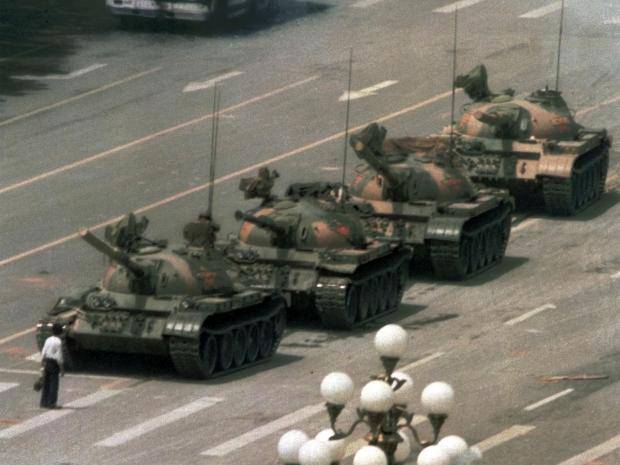

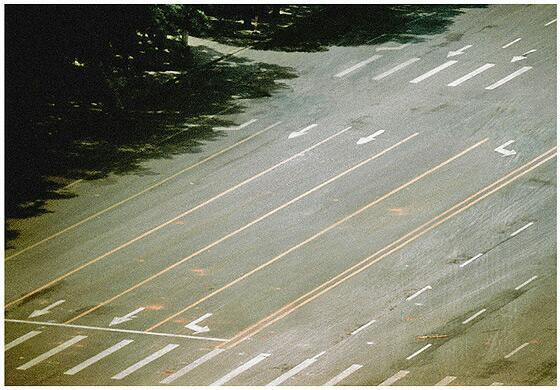
On this day, we solemnly mark the anniversary of the Tiananmen Square massacre, an event that remains a thorny, contentious topic buried deep behind the imposing edifice of China's Great Firewall. In a poignant effort to remember and honor the lives lost in this unspeakable tragedy, we are re-posting raw and unfiltered images, as well as eyewitness accounts, to portray the stark reality of that fateful day. All these through the words of Ruan Xiaohuan, a renowned writer from the "programthink" blog, whose voice we amplify today, despite his current incarceration in China for his courageous writings.
"If there's one thing left in this world that causes many people to remember you, then you are truly always alive." - Ruan Xiaohuan, programthink
With the assistance of translation technologies like DeepL and Google Translate, we hope to breath life into Ruan's extensive and meticulous chronicles of the events that unfolded that day. Ruan himself has voiced a profound sentiment, "If there's one thing left in this world that causes many people to remember you, then you are truly always alive." In the spirit of the legendary 'tankman', forever immortalized for his fearless stand against a column of tanks, we dedicate this post to programthink, with the fervent hope of preserving Ruan Xiaohuan's impactful words, his deep-rooted passion, and his resolute purpose for posterity.
The uncensored images and first-hand accounts that will be shared in this post are undoubtedly distressing. Yet, they serve to illuminate the indomitable courage of the students whose lives were tragically extinguished on June 4th, 1989. As we now yield the stage to Ruan, from programthink, we request your engagement with these stories, not just as tales of a grim past, but as essential reminders of bravery, resilience, and the human spirit's unyielding pursuit of freedom.
In the words of our guest blogger, ProgramThink:
Why Write About This Topic?
Yesterday, a fellow netizen left a comment suggesting that I should write a special piece for "May 35th." It dawned on me that since the inception of my blog, I've never really delved into the subject of "June 4th." Today, in fact, marks the 22nd anniversary of the "June 4th Massacre," presenting an apt occasion to address this topic and share some critical perspectives on the party-state. After all, my blog exists beyond the 'wall,' beyond the reach of the state's minions.
To clarify, political issues aren't my primary focus. I launched this blog in early 2009 to discuss IT and technological topics. However, the actions of the state over the past one to two years have become increasingly detestable, driving me to pen more and more politically-focused posts. It's a predicament that I find myself reluctantly in.
Why Care About Politics?
Often, I hear people around me expressing their disinterest in politics. But, I believe that in China, even if you don’t actively engage with politics, politics will inevitably engage with you. In a country like China, under a high level of totalitarian corruption, politics seeps into your everyday life. Wondering why housing prices are so high? Or why wages stagnate while prices keep climbing? Or why food safety is an escalating issue? These matters directly impact people's livelihoods and bear the imprint of political influence.
As an Individual, What Role Can One Play?
It's not uncommon to hear: "I am just an ordinary person, my involvement in politics wouldn't make a difference." In our current era of information proliferation, the Internet equips everyone with a substantial information platform. Any ordinary person, with the intention to contribute, can make a significant impact. Many influential netizens are just ordinary people in real life. For instance, when I started my blog, I had no inkling that it would attract tens of thousands of subscribers or assist numerous netizens to 'climb over the wall'. In the Celestial Empire, if even one in ten thousand individuals consistently promotes democratic ideologies and uncovers the underbelly of the party-state, it can generate massive public pressure that may deter the party-state from transgressing certain bounds.
Why Should We Care About the "June 4 Incident"?
People often say: "The June 4th incident happened so long ago, there's no need to dig up the past." However, I argue that the "June 4 Incident" represents a pivotal historical juncture in post-Cultural Revolution China. Through understanding "June 4th," everyone can grasp the true nature of the regime, acknowledging its ruthlessness, deceit, and cunning. Today's Chinese government enforces a repressive policy, encapsulated in the phrase "silencing the people is better than silencing Sichuan." (Consider the state's internet censorship and its recent persecution of human rights defenders.) Historically savvy netizens should recognize that regimes employing such repressive measures can only maintain them for so long, not indefinitely. Once the pressure peaks, an eruption becomes inevitable.
There's a timeless saying: 'Forgetting the past forfeits the wisdom of the future.' For netizens aspiring to foster political change in China, there are invaluable experiences and lessons to be learned from June 4th. These lessons could equip them with the strategies needed to challenge the party and hasten the fall of dictatorship.
The comments and photos featured in this article were curated by me last night. The majority hail from Twitter, with a handful from Sina Weibo. Most of the intriguing remarks and images originate from beyond the 'wall.' Whenever a highly sensitive subject comes into play, domestic websites tend to either be helpless, self-censoring, or subjected to censorship.
Looking Back on the Past
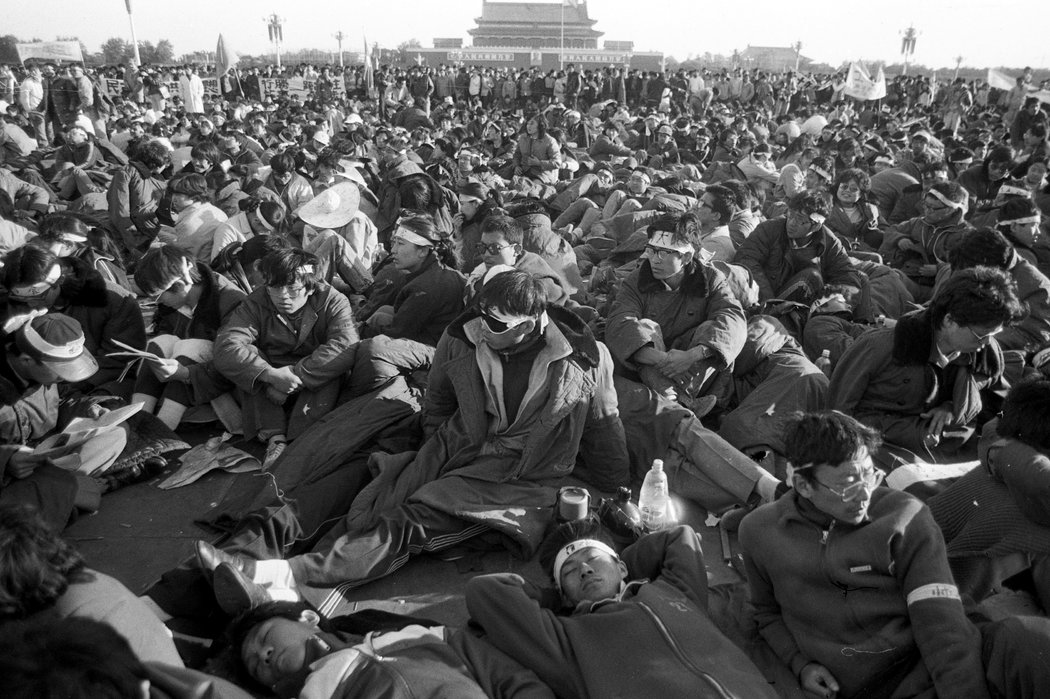
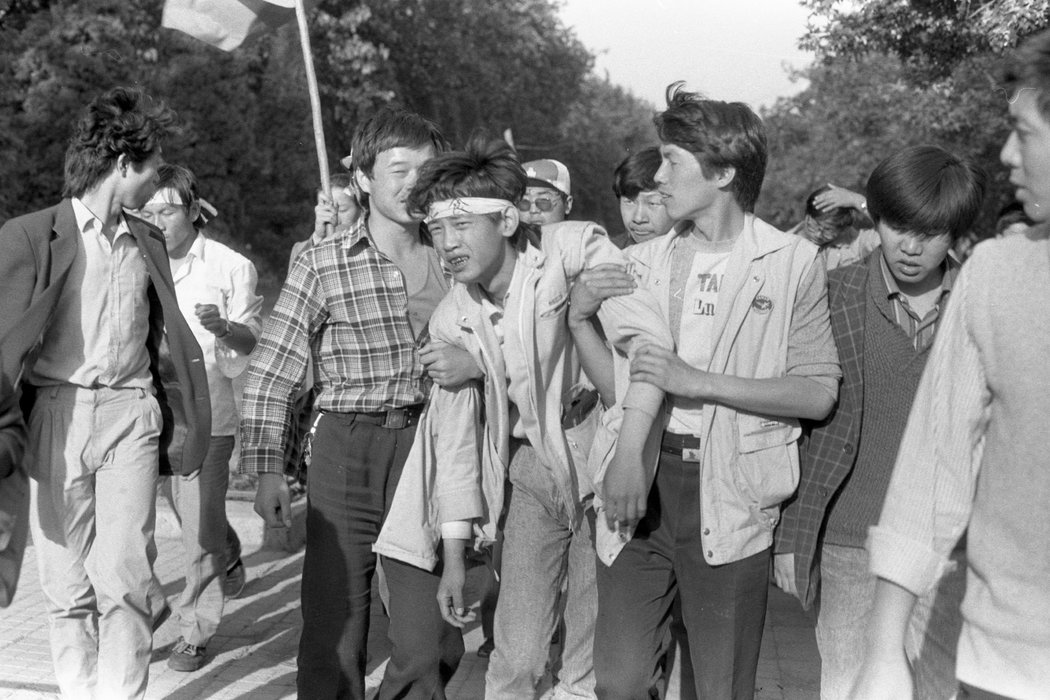
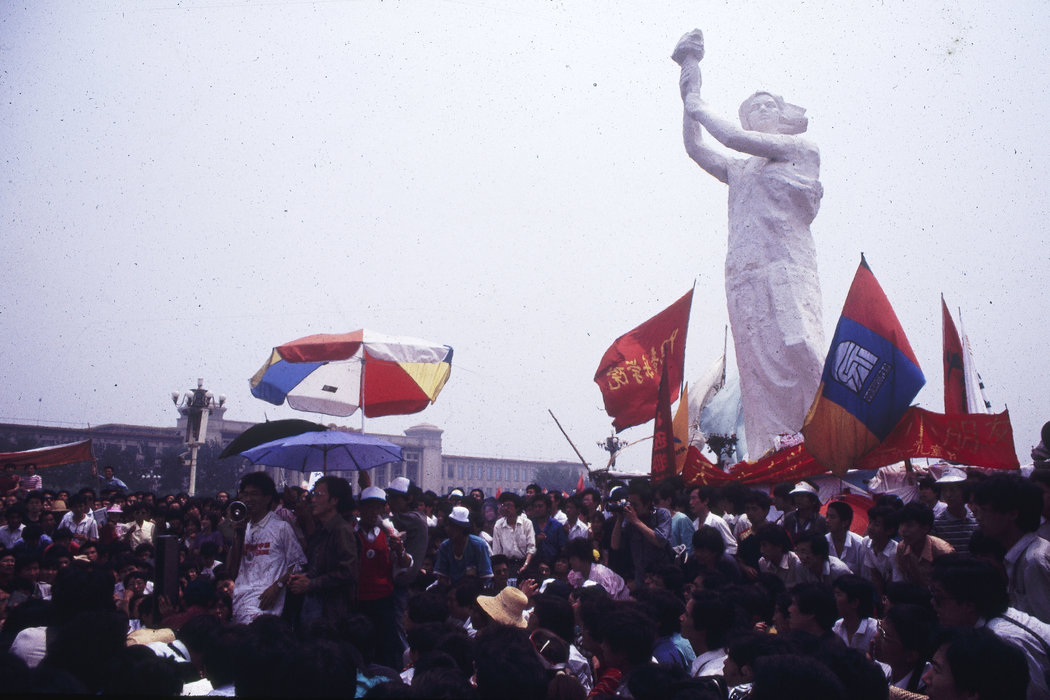
In April 1989, university students in Beijing began commemorations for the passing of Hu Yaobang, the then General Secretary of the Communist Party of China and a prominent political reformer. The gathering at Tiananmen Square initiated a series of protests demanding democratic reforms.
According to the book "The Story Behind the News," the news of Lao Hu's passing was first announced overseas by Xinhua News Agency at 12:20 PM on April 15.
By around 3 PM that same afternoon, some students from Peking University had already begun to post mourning posters at Sanjiaodi, a notable 'triangular place' renowned both domestically and internationally. (One can't help but admire the swift response from the Peking University students.) By 4 PM, large-character posters had been displayed across the triangular area, with some of the content beginning to bear political implications. For instance, one such poster cryptically remarked: "those who should have departed didn't, and those who shouldn't have, have departed" — an allusion to Deng Xiaoping's longevity and Hu Yaobang's untimely passing.
Aside from Peking University, several other esteemed universities in the capital — such as Renmin University and Tsinghua University — also saw the emergence of large-character posters mourning Lao Hu either that same afternoon or by nightfall.
By April 16, pertinent large-character posters began appearing in the majority of colleges and universities in Beijing, attracting many students who were reading and transcribing them.
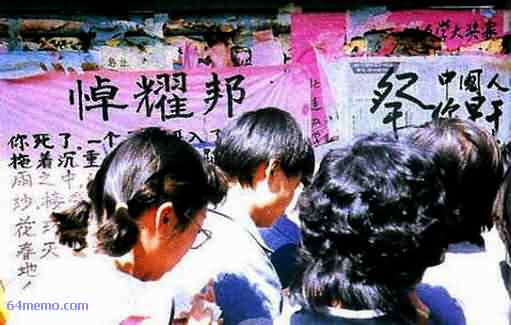

Besides the posters within the educational institutions, isolated memorial activities also started occurring at the Monument to the People's Heroes in Tiananmen Square. On the 16th, eight wreaths and some elegiac couplets were laid on the monument. However, for unexplained reasons, these were removed by police officers in the middle of the night. This action undeniably incensed the students. A prevailing sentiment among them was: if you prohibit us from doing it, we will be more determined to do it. This defiance partly catalyzed a larger student turnout at the monument the following day for the memorial services.
Below is an image of a large-character poster composed by Peking University students after they discovered the confiscated wreaths. It also hints at the "Fourth Five-Year Movement" that transpired at the conclusion of the Cultural Revolution.

On April 17th, numerous college students began to venture beyond their campuses to pay respects at Tiananmen Square. Apart from the outrage over the removal of the wreaths, another reason was that faculty and students from some universities planned to hold memorials and mourning activities on their campuses. However, the school administrators, apprehensive about the "86 student movement," disallowed these activities to occur on campus. These two factors significantly amplified the mourning activities in Beijing.
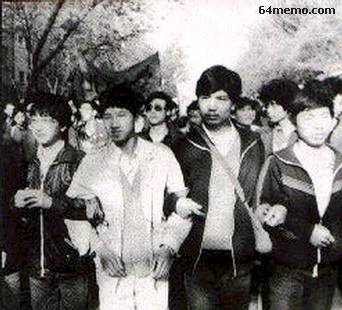
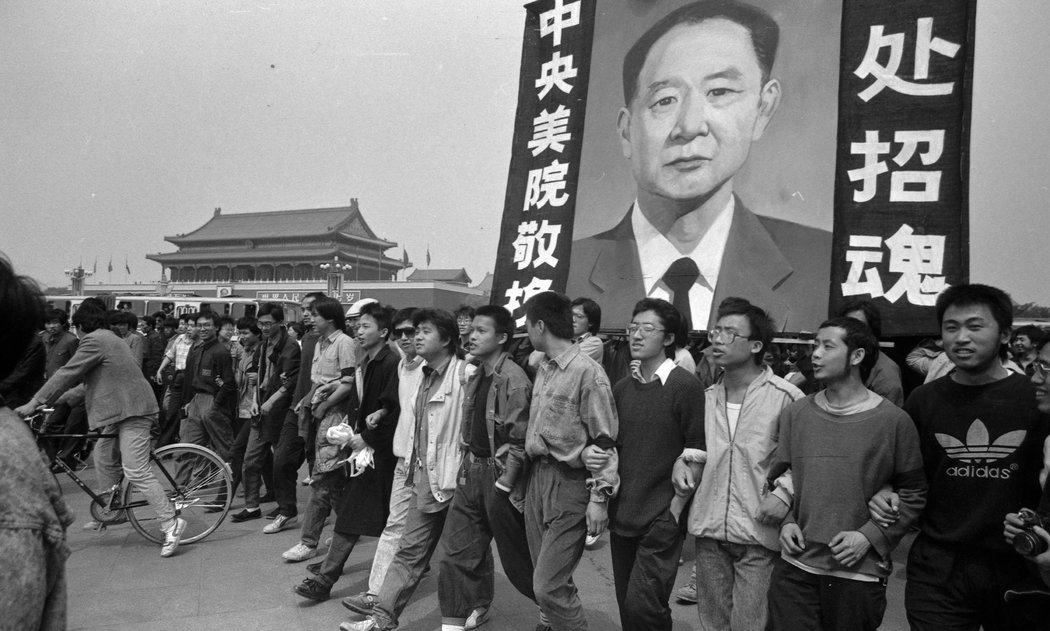
On the same day, students from the Central Academy of Fine Arts created a large portrait (as one might expect from fine arts students), which was placed on the monument and quickly became its most striking feature. By the end of the day, wreaths bearing the following signatures were placed at the monument: "Department of Chemistry, Tsinghua University", "Some students of Beihang University", "Teachers and students of Beihang University", "Teachers and students of Beijing Normal University", "All graduate students of the Chinese Academy of Social Sciences", "Young Teachers of China University of Political Science and Law", "Beijing Medical University Student Union", "A Political and Legal Cadre".
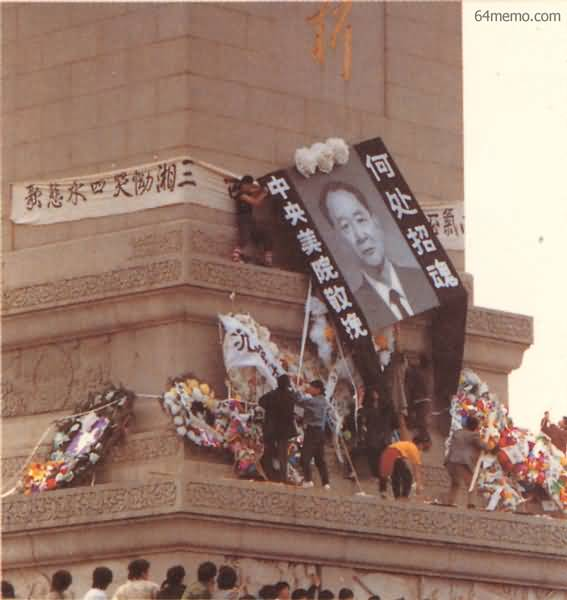
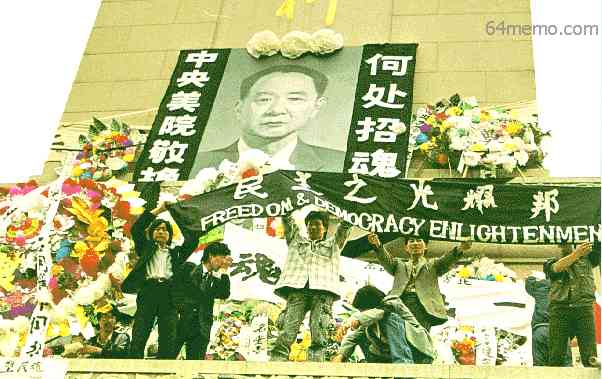
Around 10 PM that night, some Peking University students created a lengthy banner, more than 10 meters in length and over 2 meters wide, bearing the message "The Soul of China - From Some Peking University Alumni, Teachers, and Students". Initially, only a handful of students paraded this banner around the campus. As more students joined, many proposed heading to the square. When the procession departed the campus, it was roughly a thousand strong; along the way, over a thousand students from Renmin University and another thousand from Tsinghua University joined. Over 3,000 individuals arrived at the monument around 4:30 AM and hung the banners on it.
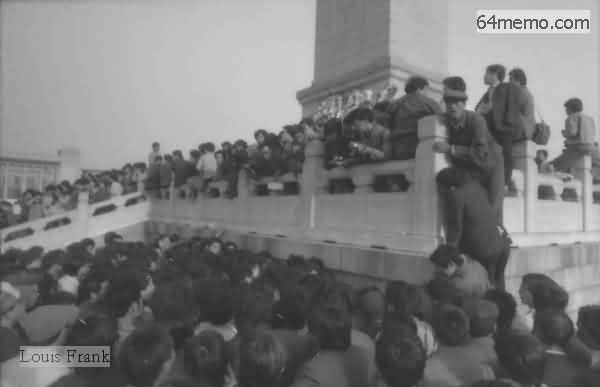
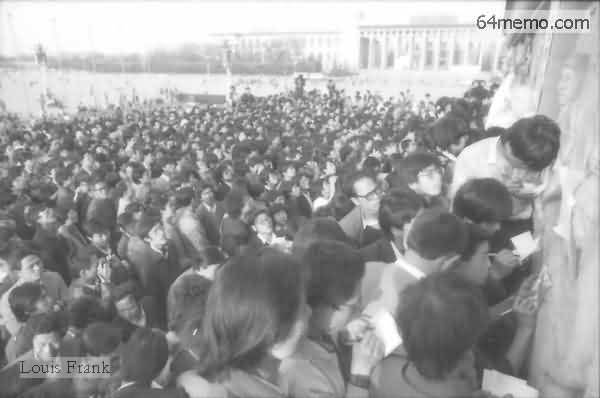

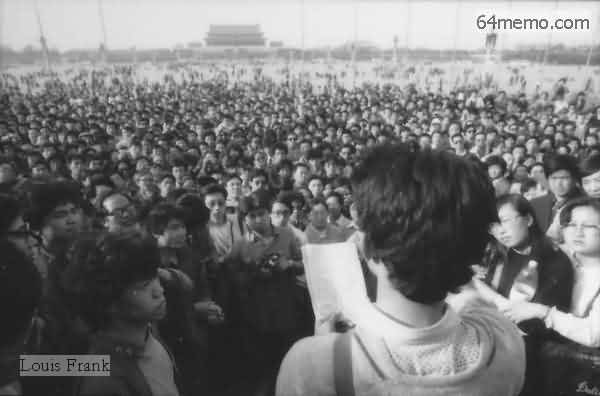
Aside from the mourning at the square, large-character posters continued to appear on campuses, drawing more and more observers - not only students but also the general public.

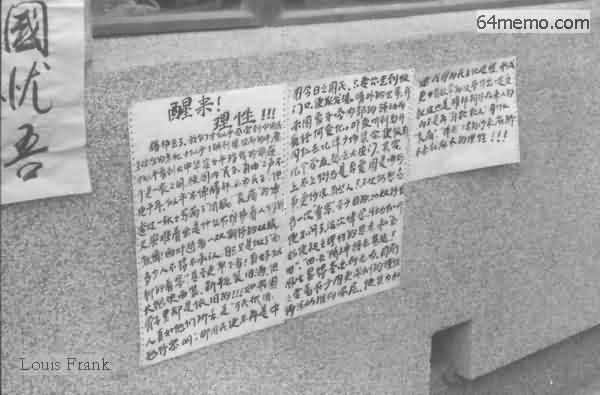
On April 18th, there was a noticeable increase in the crowd gathered in the square. A comparison between photos from the 18th and 17th reveals a significant surge in the number of people present. It's estimated that nearly 100,000 people congregated on this day.
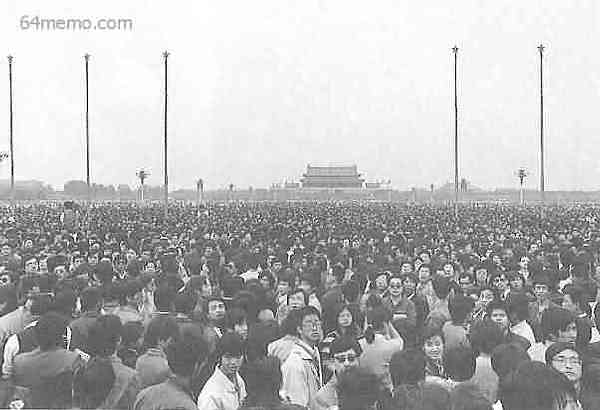
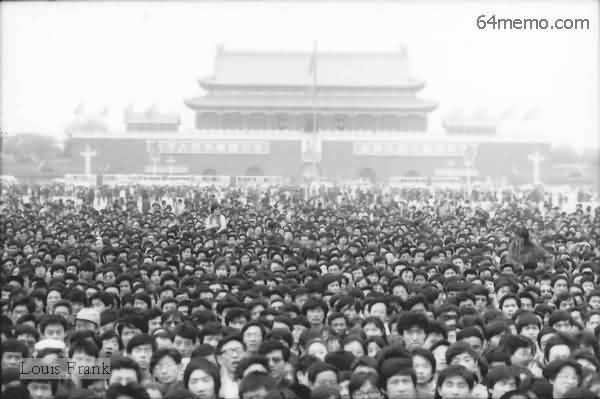
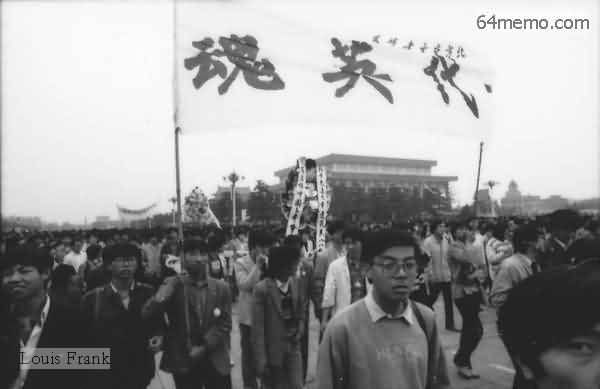
Another notable event on the 18th was the sit-in and petition outside the Great Hall of the People by tens of thousands of college students. This marked a new phase in the progression of the student movement.
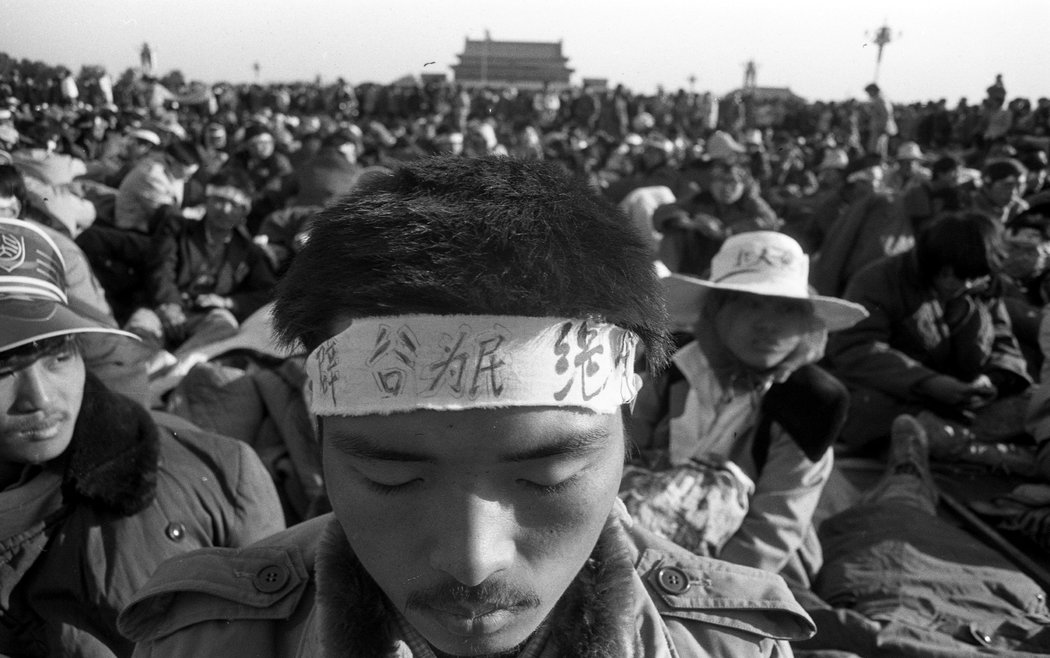
May, 1989
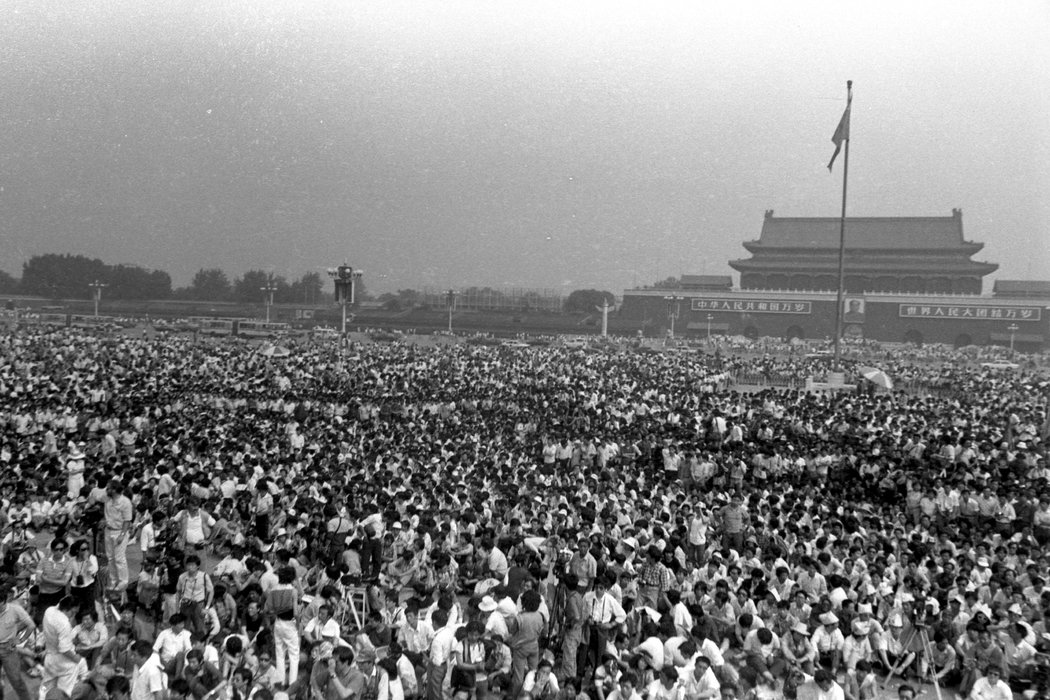
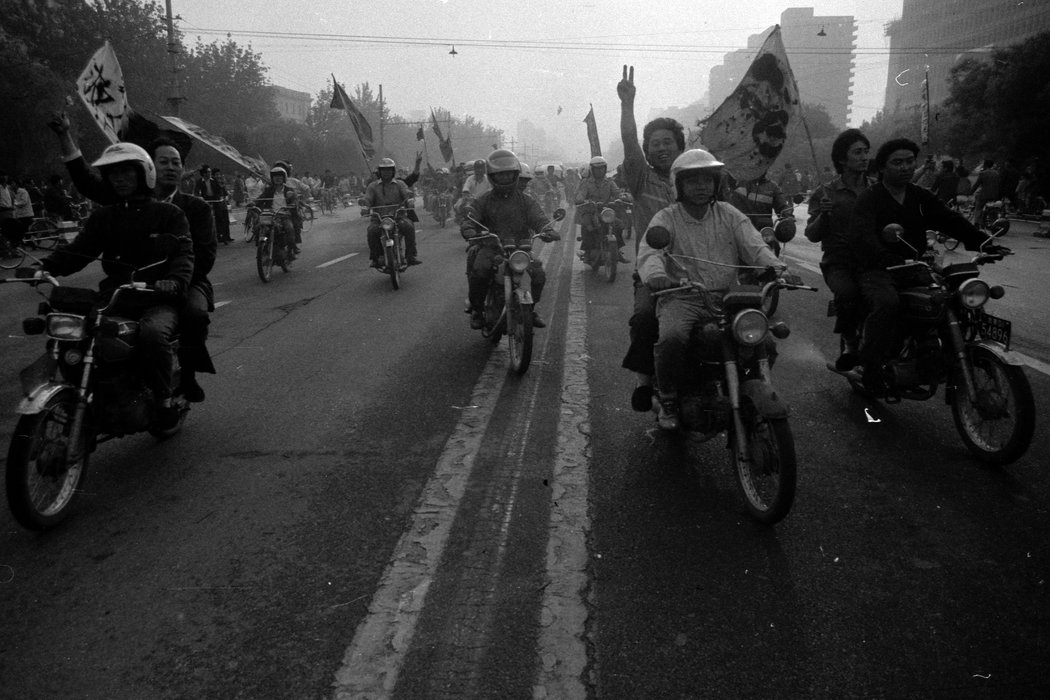
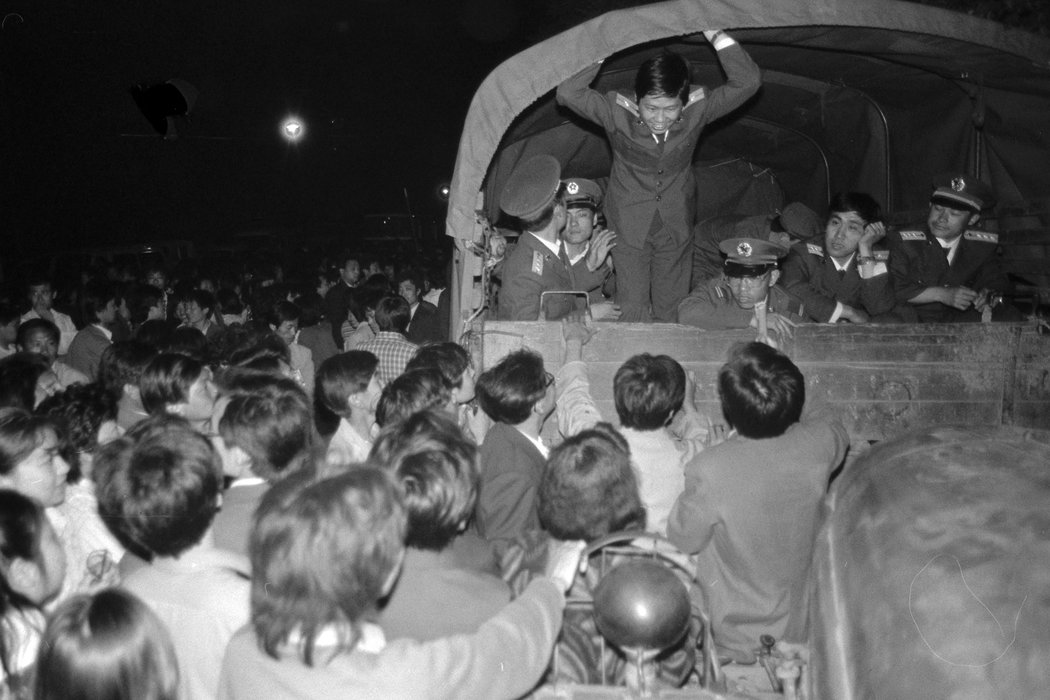
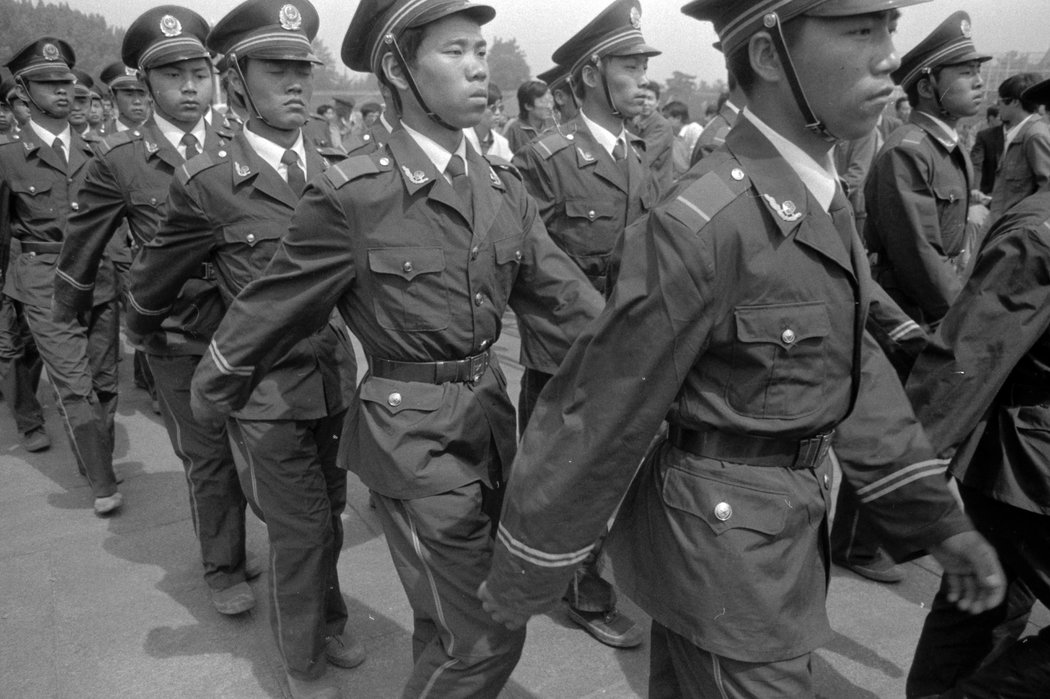
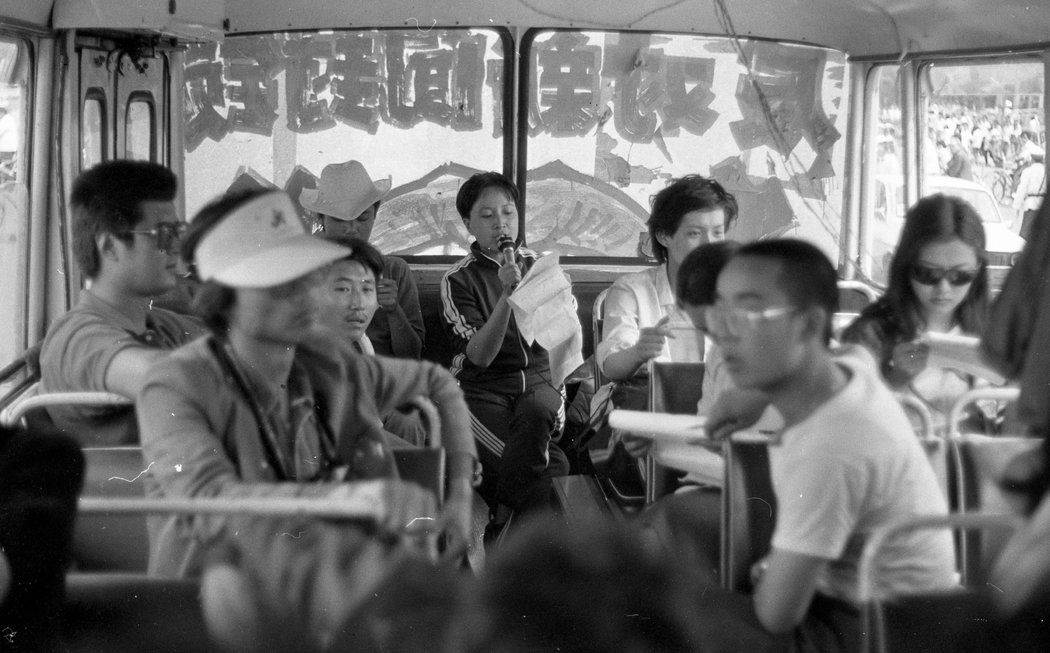
June, 1989
This section republishes numerous tweets by Wu Renhua, a participant in the June Fourth Movement, who gathered a wealth of evidence (including photographs) after going into exile overseas. On my online drive, I've shared two books he authored — "The Inside Story of the Bloody Clearance of Tiananmen Square" and "Memorabilia of Tiananmen Incident in 1989".
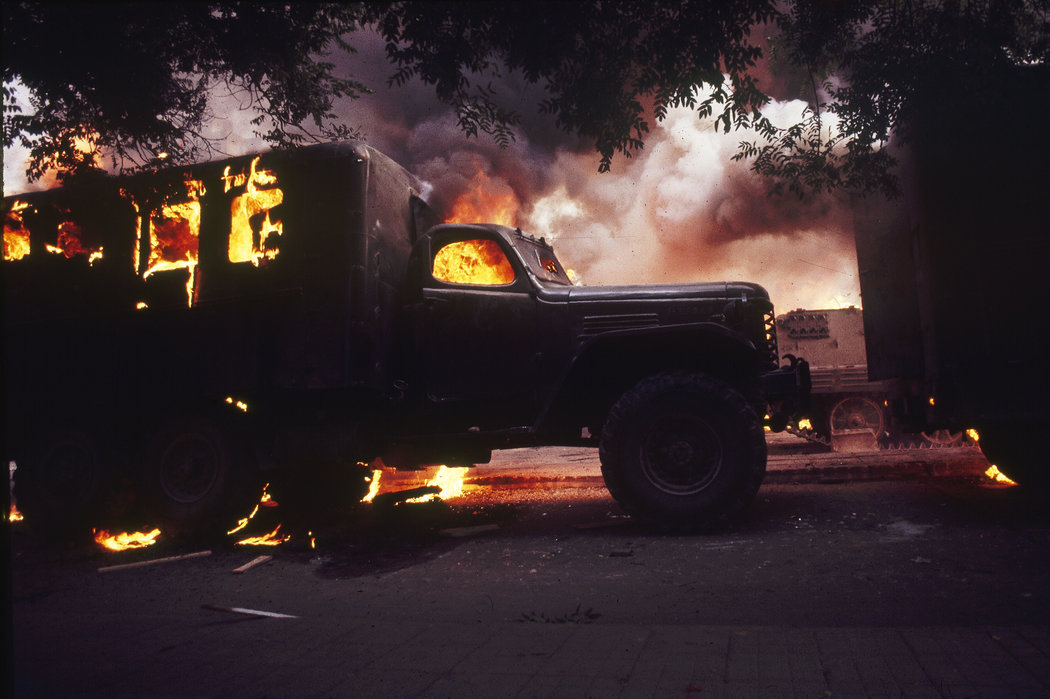
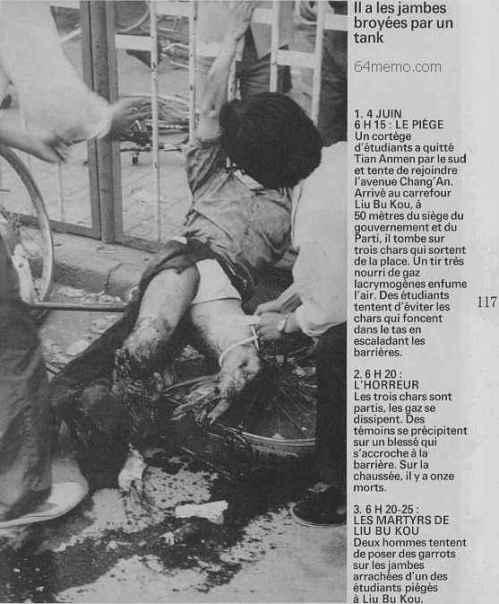
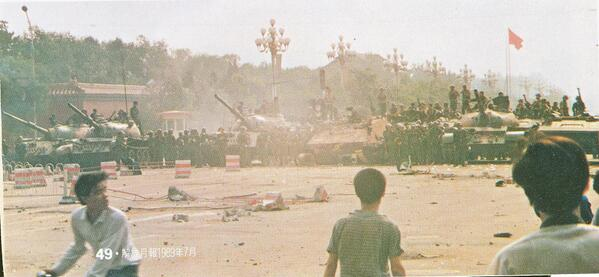
In the early hours of June 4, 1989, under the leadership of Luo Gang, three tanks from the 1st Tank Division pursued the retreating student column from the rear at Liubukou near Xinhuamen, resulting in 11 deaths and several injuries.
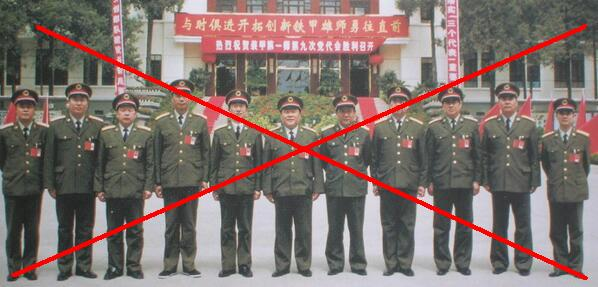
The officers of the 1st Tank Division who caused the Liubukou tragedy. From left: Tang Lin, Zhang Zhiyuan, Wang Xiaoguo, Zhang Wudian, Gao Qingyun, Jin Hailong, Deng Hanqiao, Jia Zhenlu, Yao Yuexuan, Zang Yuanzheng, Peng Jie. The deputy head Jia Zhenlu and the head Luo Gang led the tank convoy to chase down the student team.
In the pre-dawn hours of June 4, 1989, at Liubukou, tanks chased and ran over the retreating student column. Fang Zheng, a student from the Beijing Institute of Physical Education, had his legs crushed and was hanging from a railing on the side of the road. Bystanders were attempting to stem his bleeding.
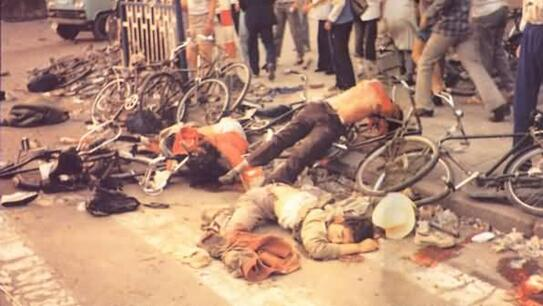
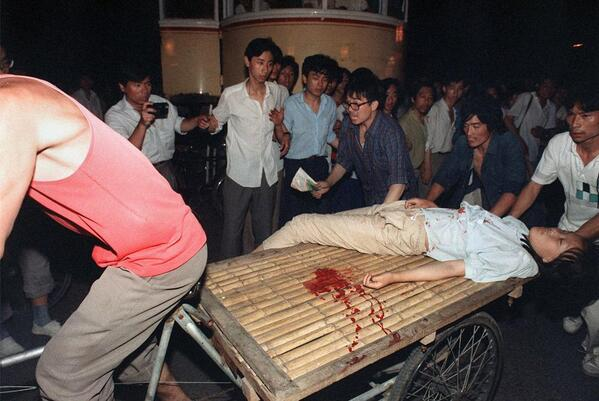
In the early morning of June 4, 1989, at the southern entrance of Nanchizi Street, East Chang'an Street, on the eastern side of Tiananmen Gate Tower, a tricycle can be seen in the photograph transporting gunshot victims. Here, citizens continued to protest the massacre at the 38th Army cordon, and soldiers continued to fire into the crowd, resulting in a high number of casualties.
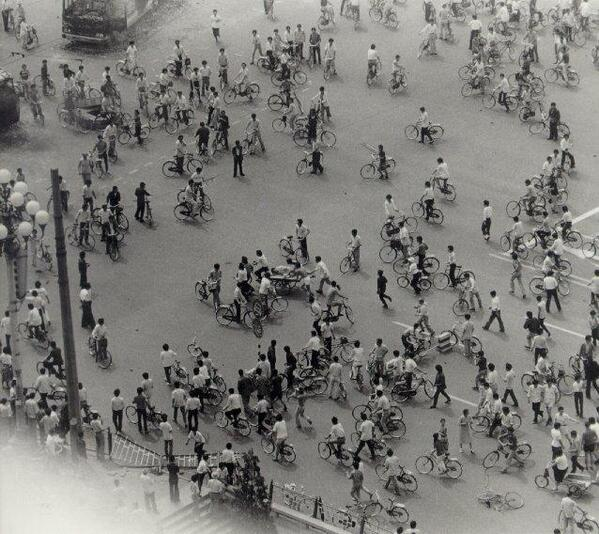
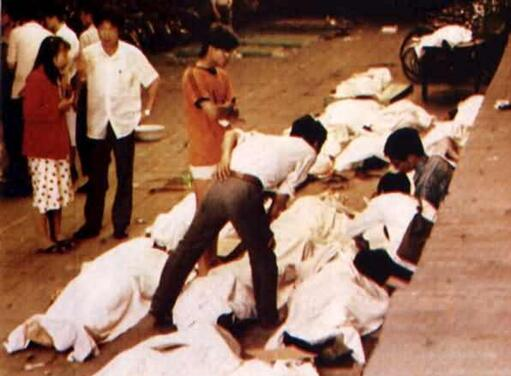
On June 4, 1989, Fuxing Hospital, which was near to Fuxingmen and Muxidi, where the massacre was particularly violent, had so many victims that the morgue was overflowing, leaving the remaining bodies to be stored in the bicycle shed.
Following 1:30 a.m. on June 4, 1989, at the southern entrance of Nanchizi Street, East Chang'an Street, on the eastern side of Tiananmen Square, citizens continued to protest the massacre at the 38th Army cordon. Soldiers continued to fire into the crowd, resulting in numerous casualties.
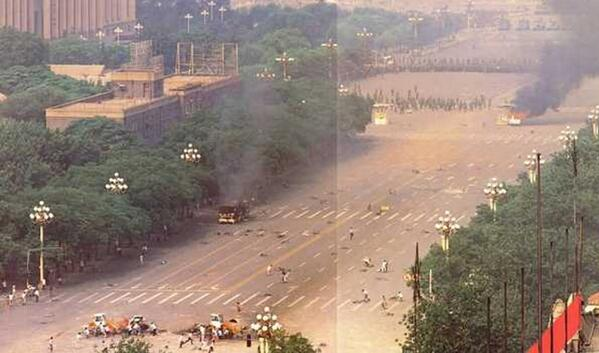
In the early morning of June 4, 1989, near Xinhua Gate at Liubukou, the 1st Tank Division of the Tianjin Garrison Area established a cordon. It was this tank unit that caused the Liubukou tragedy by pursuing and crushing the retreating students.
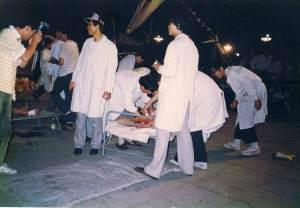
In the early hours of June 4, 1989, a makeshift ambulance station established by volunteer medics in Tiananmen Square admitted a large number of gunshot victims, some of whom were critically wounded and subsequently died. The CCP has always denied there was any shooting in the square, but this photograph tells a different story.
On June 4, 1989, the mother of a victim is seen cradling the corpse and sobbing inconsolably. Twenty-five years have since passed, yet justice remains elusive and the victims' families continue to endure their pain.
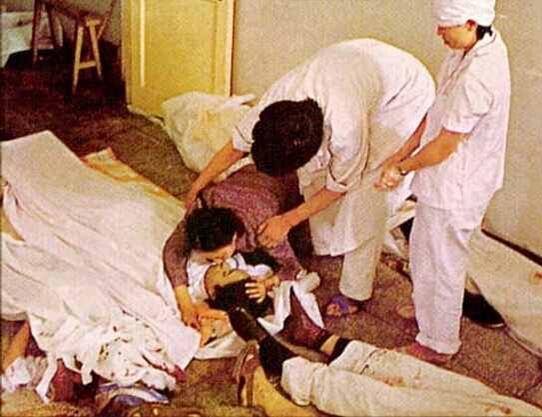
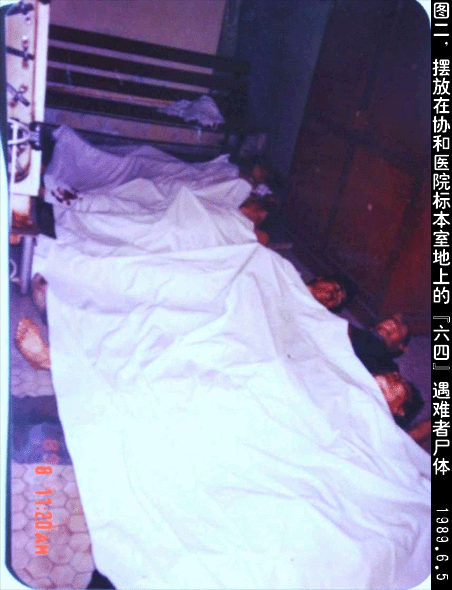
On June 4, 1989, the remains of victims can be seen in the herbarium of Peking Union Medical College Hospital. The victims and wounded primarily came from the vicinity of Tiananmen Square, including Xiehe Hospital, Beijing Hospital, and Tongren Hospital.
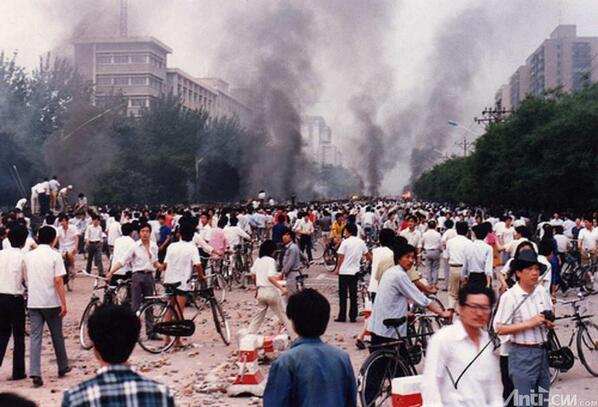
In the early hours of June 4, 1989, a crowd enveloped the convoy of the 28th Group Army on West Chang'an Avenue. Doubting the tales of a massacre shared by the public, the soldiers were presented with numerous blood-soaked clothes brought from the nearby Fuxing Hospital. Confronted with this evidence, the soldiers accepted the truth and declared they would cease the enforcement of the suppression order.
During the night of June 3, 1989, the citizens of Beijing braved a storm of bullets to rescue the injured. Those navigating tricycles in these efforts emerged as heroes.
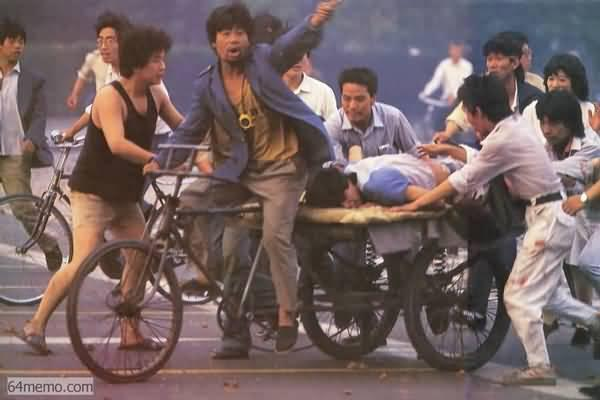
On the same night, individuals managed to rescue female students using three-wheel flatbed trucks. Following the massacre, a significant number of Beijing's residents spontaneously rose to assist the wounded, with three-wheeled flatbed trucks becoming a common sight during these rescue efforts. The sacrifices made by the people of Beijing in the name of righteousness were deeply moving.
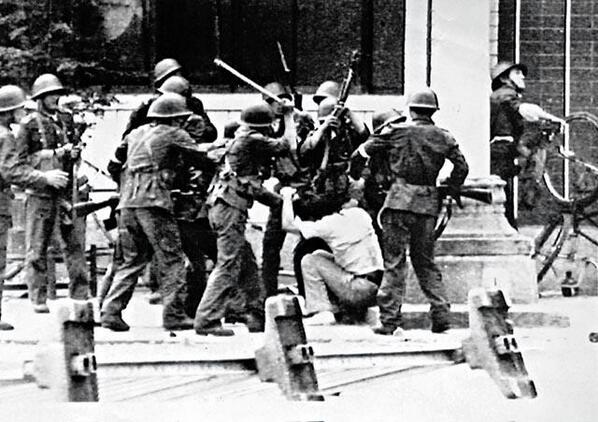
In the early hours of June 4, 1989, numerous soldiers were observed violently assaulting a student with their gun butts. Following the forcible clearing of Tiananmen Square, a great many detained students and citizens were held within the Working People's Cultural Palace, adjacent to the Tiananmen Rostrum. All were subjected to severe beatings.
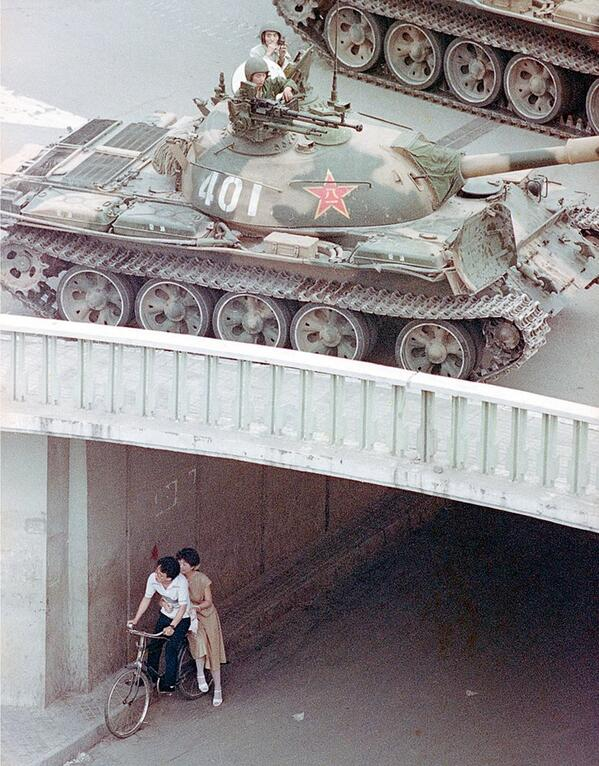
This widely distributed photo shows a couple dodging tanks beneath an overpass as the tanks roll over them.
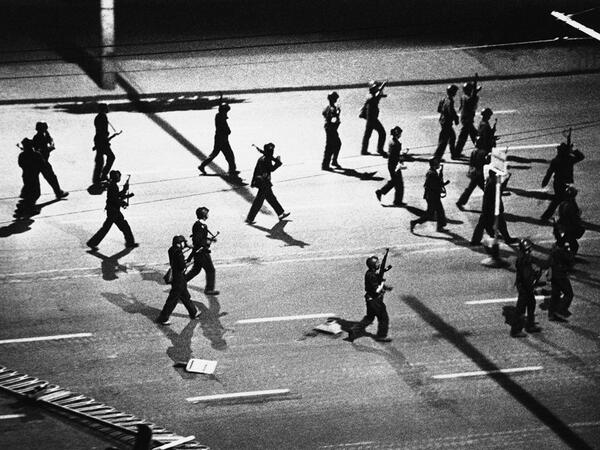
June 5, 1989, 10:00pm - Groups of soldiers roam Beijing streets, shooting into air, amid rumors of tensions between units.
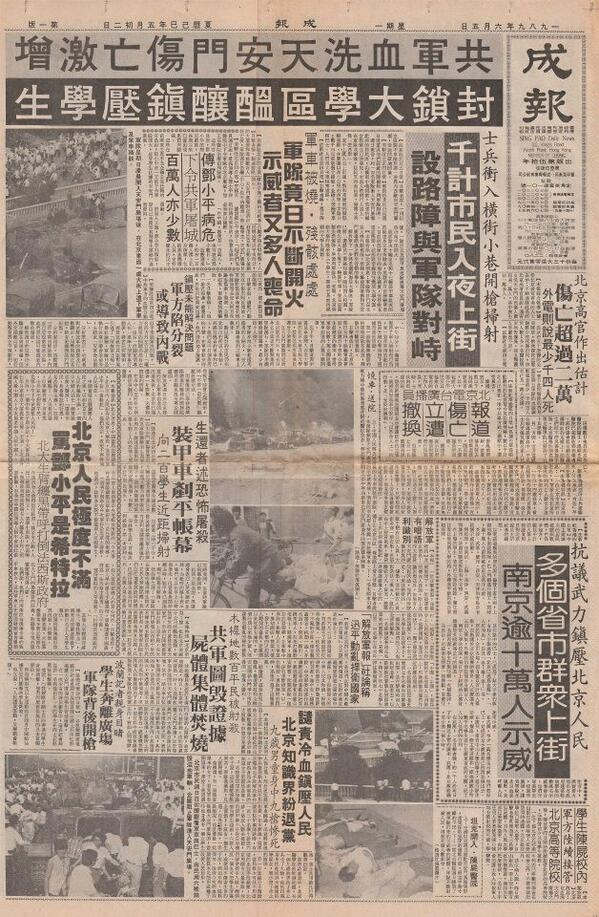
A newspaper clipping from 1989:
Tankman
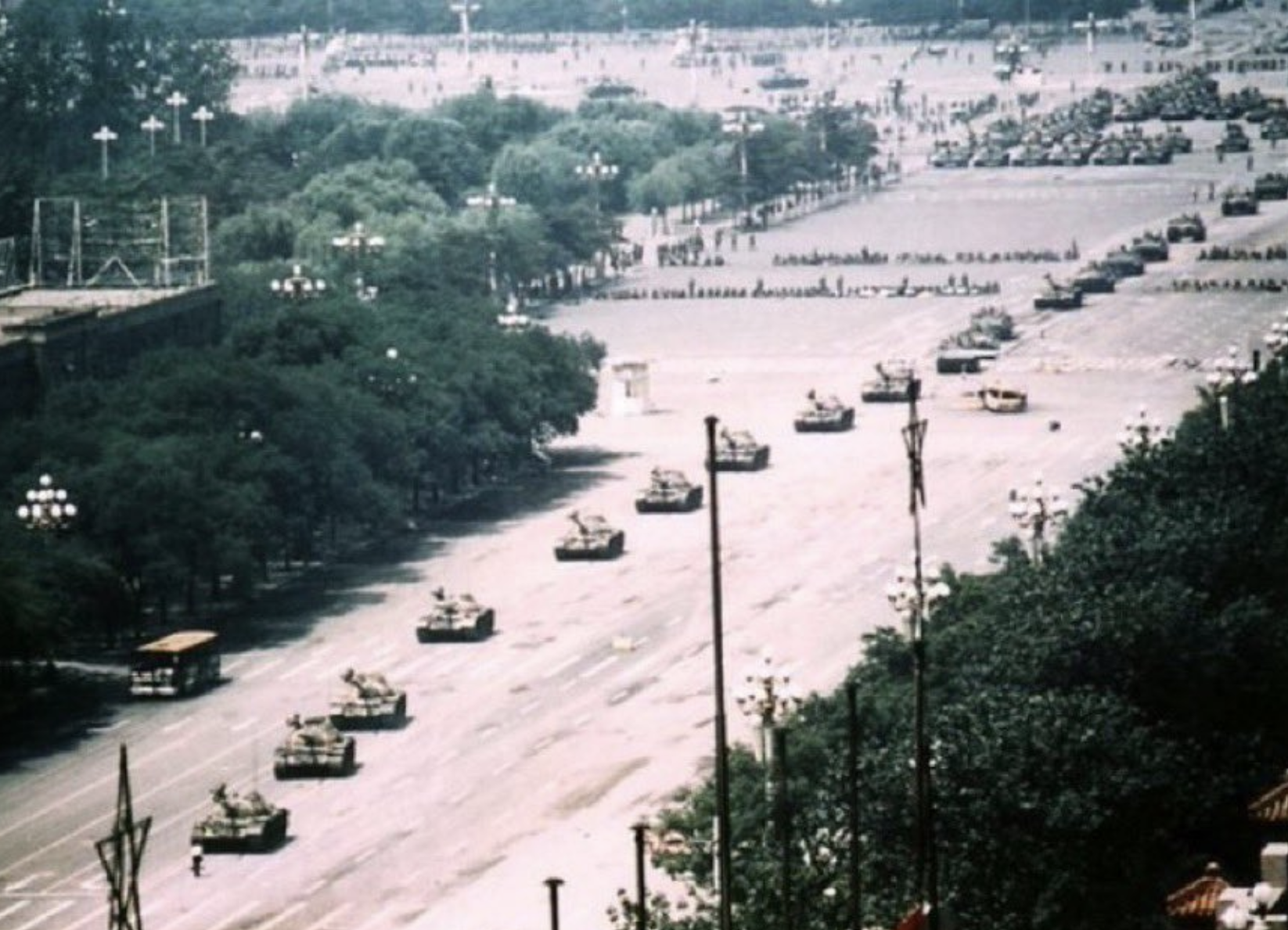
Tank Man seems to encapsulate many of the negative stereotypes typically associated with the Chinese populace: slim build, unremarkable, donning average attire and hairstyles, and toting disorganized plastic bags in the street.
He is not akin to an American superhero, inherently bestowed with remarkable powers and a sense of responsibility. It's possible that he stepped forward simply out of unbearable frustration, but he managed to halt a line of tanks much like a Superman stopping a train.
The ideal aspect is that he only presents his back to the world, thereby morphing into a symbolic and elusive representation of the fervor that burns within the hearts of the Chinese people.
In Conclusion
As we conclude this dialogue, it is important to acknowledge and thank Ruan Xiaohuan for his courageous writing that has significantly influenced numerous individuals and provided a source of inspiration to countless more. His dedication to illuminating the truth, in a world often shrouded in misconceptions, is a beacon of hope and bravery that continues to shed light on the path to justice.
In this digital age, attempts to censor online information or deny historical facts are not just futile but often counterproductive. Much like the smoldering ashes that are ignored, the flames of truth will eventually roar back to life. With each attempt to stifle their voices, the intensity of their message only grows stronger.
The attempts to censor the events of June 4th 1989, and the subsequent efforts to silence programthink and imprison Ruan, serve as stark reminders of this reality. However, this will not extinguish the impact of their words. Ruan's powerful insights will continue to resonate across the vast expanse of the digital world, inspiring thousands more and perpetuating their influence for years to come.
In the end, no prison can confine the power of the truth, and no amount of censorship can erase the echoes of history. In the face of adversity, voices like Ruan's continue to rise, bringing forth the courage and determination to relentlessly seek justice and truth. Their legacy will continue to inspire us, as we journey towards a future where history is acknowledged, and the truth is valued above all.