
What is the FCC’S Privacy Protection, and why should you be worried about Congress repealing it?
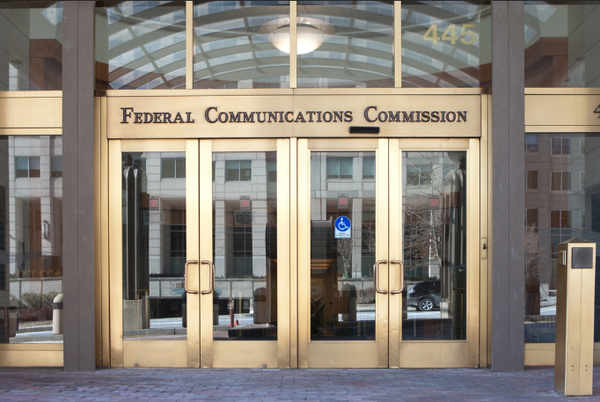
The Federal Communications Commission (FFC) is an independent agency of the United States government created by Congressional statute in order to regulate communications by radio, television, satellite and cable in the United States. That also includes the Internet. The Privacy Protection rules are meant to empower consumers to decide how data are used and shared by broadband providers. Yet, The current administration is moving quickly to undo many regulations of the previous era, and Congress is currently actively looking into repealing the FFC’s Privacy Protection rules.
ISPs are already known to regularly disregard the value of their users’ right to privacy. In fact, they don’t even consider your web browsing and app usage history “sensitive data”, and for a good reason: not doing so allows them to dispose of it at will, and represents a lot of money in terms of advertising. With Congress reconsidering the FCC’s Privacy rules on ISPs, they may soon be free to make use of your data legally, whether you agree or not, and in ways you wouldn’t suspect could be so invasive.
Similar practices are already used by services such as Google and Facebook, collecting your browsing data in order to propose relevant content you may be more interested it. To this day, users can choose not to use those services if they do not agree with this system. However, implementing such measures on a global scale wouldn’t leave users much of a choice from the very moment they use internet at all. Let’s look into 5 examples of what disturbing things could happen if the American Congress does revoke the FCC’s Privacy rules.
5. Pre-installing recording apps and software on your devices, and tracking your every move online
Should congress decide to repeal protections currently in place, users could see pre-installed apps and software that track every website they visit and all the apps they use become common practice. From that point, the information would be sent back to their ISP.
In practical terms, such measures could take the form of pre-installed and undeletable third party apps on new smartphones meant to record their users’ every move online, including which secure websites they visit.
For example, preinstalled software like Carrier IQ allows your ISP to observe everything you do on your phone. While mobile ISPs may have backed down on using Carrier IQ in the past, it is relatively certain that if the FCC’s privacy rules are revoked, a lot of ISPs will be more than happy to go back to similar schemes to monitor peoples’ activities.
4. Monitoring your traffic and inserting ads
It’s no secret that browsing information is extremely valuable to marketers and their targeted advertising. No wonder then that ISPs would be very happy to make use of users’ data to inject adverts based on what types of websites you visit and what you do online. They have already done so in the past.
Your ISP could plain and simply spy on you to sell ads based on your Internet traffic, examining each packet to analyze your profile, ultimately leading to more ads being injected into your browsing experience. They would dispose of a record of your entire web history, your likes and your dislikes, knowing more things about you and your online habits than your closest friends.
3. Reselling your data to marketers
A users’ ISP is their gateway to the internet, which means all online activity passes through it. Every single thing a user does online, their every search, they every online purchase, every website they visit has to transit through an ISP. All this information is extremely valuable for marketing companies, and ISPs would be more than happy to sell their users’ data, considering how much money would be involved in such transactions.
The sale of such information represents a massive hypothetical revenue stream to ISPs, and some are already doing it, but they don’t really want you to know that they’re selling data about your location, demographics, and browsing history.
It is thought that ISPs are already selling this information because the FCC rules haven’t yet come into effect, but if they happen to be repealed before that point, users could see their data being sold forever more.
2. Hijacking your internet searches
ISPs are already known to have hijacked their users’ internet searches when they used search engines like Google or Yahoo by monitoring search terms
Back in 2011, several ISPs were caught working with Paxfire in order to hijack their customers’ online searches when using Bing, Yahoo and Google: When a user entered a search term in their search box or URL bar, their ISP redirected the query to Paxfire instead of letting the user access an actual search engine. Paxfire would then check the terms and verify if it matched a list of companies that had paid to have more users visit their websites. If that was indeed the case, Paxfire would send the user directly on the company’s website without previously going through a search engine and displaying search results, which is how things would normally go. ISPs would allegedly benefit from the whole operation by receiving money from Paxfire for granting them access to their users’ connection ; this whole process, of course, unbeknownst to the user.
1. Injecting undetectable, un-deletable tracking cookies to monitor your traffic
Every average internet user knows what a cookie is : a small text file stored on a user’s computer’s browser directory or program data subfolders. Cookies are created when using a browser to visit a website that uses cookies to track your movements within the site, help you resume where you left off, remember your registered login, preferences, and other customization functions. Needless to say, they’re considered pretty useful, and their use is very much standardized. Any given user can delete a cookie if they want to.
However, if privacy protections were to be rolled back, users could see a type of super cookies being installed without their consent, a type that’s impossible to get rid of.
In 2014, a company named Verizon Wireless decided that it would be a good idea to insert that kind of super cookies into all of its mobile customers’ internet traffic, without explicitly informing their customers. Subsequently, anyone, and not just advertisers and marketing companies, could track a user’s every move online. Clearing a browser’s cookies was no use, since advertisers could use Verizon’s tool to resurrect them, giving birth to a new sort of cookie appropriately called “zombie cookies”. That basically means that users would have no choice but to let those super cookies collect their data on a permanent basis.
Sadly, the privacy rules are unlikely to survive, since they are opposed both by the new FCC chairman. What is still to be determined is whether the FCC will have any authority over ISPs’ privacy practices if the rules are eliminated.
Public Knowledge and other consumer advocacy groups argued that the FCC was correct to classify Web browsing and app usage history as sensitive information.
If you’re concerned about those severely scary privacy issues, feel free to check out the Don’t let Congress Undermine Our Online Privacy campaign, and find out what you can do to stop these possibilities becoming a reality.